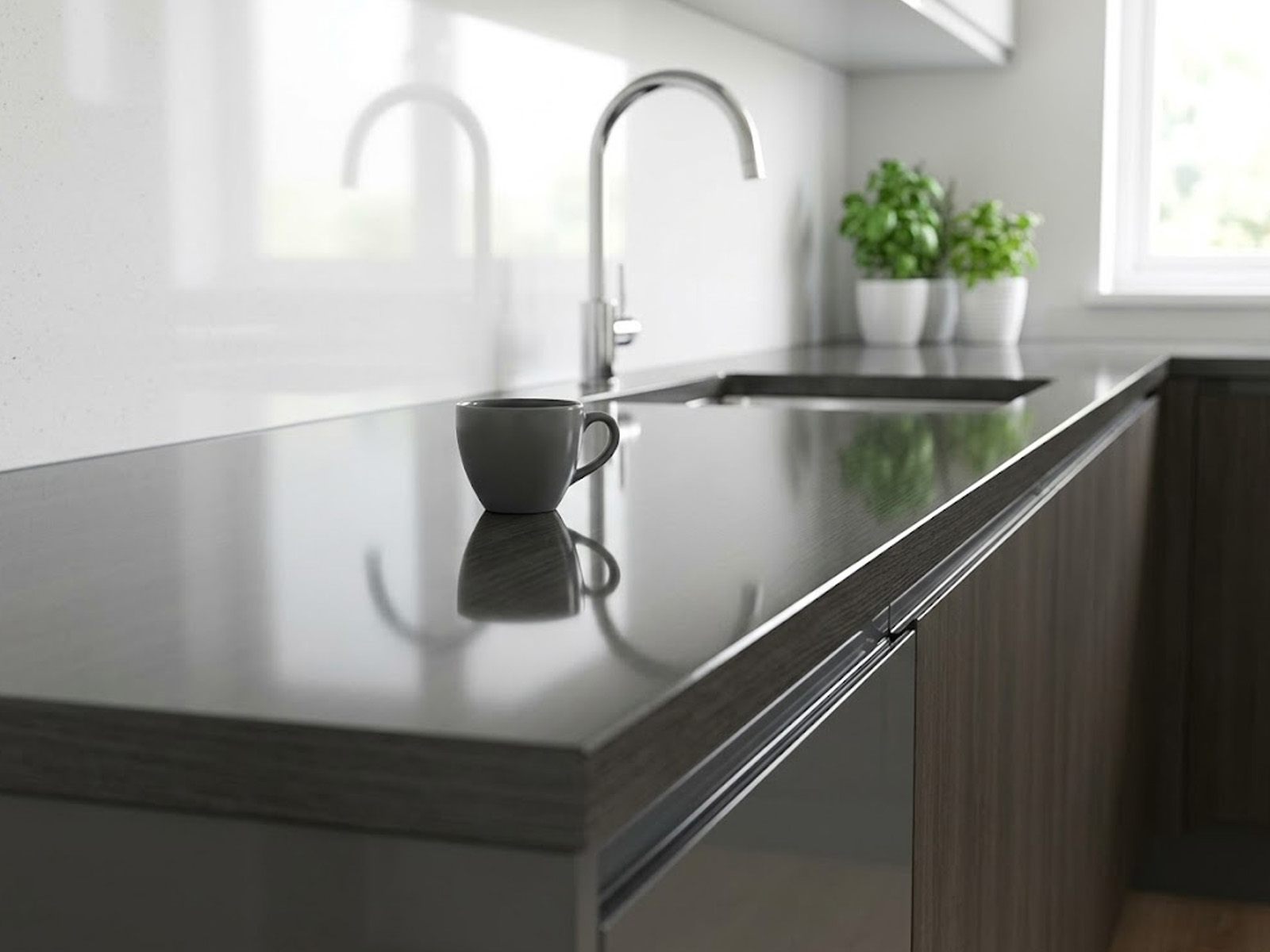
The Golden Rule: When cleaning high-gloss laminate, you must strictly avoid abrasive scouring pads, steel wool, and bleach-based cleaners to prevent permanent micro-scratching.
Safe Daily Routine: Use only soft microfibre cloths, warm water, and a mild, pH-neutral dish soap to maintain the mirror-like sheen of your worktop.
Streak-Free Drying: Always follow a damp wipe with a clean, dry microfibre cloth to eliminate water spots and cloudiness.
Fabricator’s Advice: High-gloss surfaces highlight every fingerprint and smudge, necessitating a consistent, gentle cleaning regime to protect the factory-applied resin wear layer.
Understanding the Chemistry of Cleaning High Gloss Laminate
As master fabricators who install bespoke kitchen surfaces daily, we see the devastating results of improper maintenance. A high-gloss finish is achieved through a factory-applied resin layer that is highly reflective but physically soft enough to be damaged by harsh chemicals or coarse cleaning materials.
When you are cleaning high-gloss laminate, you are essentially caring for a delicate plastic-based surface. Any abrasive particle trapped in a cloth will leave thousands of tiny scratches, which eventually dull the surface and make it significantly more difficult to keep clean in the future.
Why Abrasive Cleaners Destroy Your High-Gloss Finish
Many domestic cleaning products available in UK supermarkets contain harsh acidic or alkaline agents that react poorly with the resin topcoat. While these products might appear to clean the surface, they slowly erode the gloss, leaving a cloudy or hazy appearance that can never be fully restored.
We always advise our clients to stick to the simplest, most gentle products available. Avoiding these potent chemical cleaners ensures that your premium Laminate worktops retain their vibrant clarity and structural integrity throughout their entire lifespan.
Professional Tips for Cleaning High Gloss Laminate Streak-Free
Achieving that perfect, showroom-quality shine requires a specific technique rather than a complicated array of expensive chemical bottles. After removing daily kitchen grease, the most important step in cleaning high-gloss laminate is immediate, thorough drying using a fresh, lint-free microfibre cloth.
If you leave cleaning agents or water to air-dry on the surface, they will leave unsightly streaks and minerals behind. We recommend a two-stage process: first, use a mild soapy solution to lift the dirt, and second, use a dry cloth to buff the surface to a brilliant, streak-free polish.
Addressing Stubborn Grease and Kitchen Stains
For more stubborn culinary stains, avoid the temptation to reach for abrasive powders or heavy-duty sponges. Instead, dampen your cloth with a slightly stronger concentration of warm water and a high-quality pH-neutral detergent, and let it sit on the stain for a few minutes to soften the residue.
This patient approach prevents the need for physical scrubbing, which is the primary cause of long-term finish degradation. If you find your surfaces are becoming impossible to clean, it may be time to consult our detailed analysis of the laminate worktop cost UK for potential replacement options.
Avoiding Catastrophic Installation and Maintenance Mistakes
One of the most frequent errors we observe is the incorrect selection of sink fixtures leading to water pooling around the worktop edge. When water sits on the joint, no amount of gentle cleaning can prevent the underlying chipboard core from absorbing moisture and swelling.
We always prioritise precise, watertight joints during our factory-based fabrication to assist you in cleaning high gloss laminate surfaces effectively. If your joints are uneven or poorly sealed, dirt and bacteria will inevitably accumulate, rendering even the safest cleaning products completely ineffective.
The Dangers of Thermal Shock
Another frequent oversight is the placement of extremely hot pans or roasting tins directly onto the surface. High-gloss finishes are exceptionally sensitive to thermal shock, which can cause the resin layer to bubble or discolour permanently, a form of damage that cannot be cleaned away.
Always use wooden trivets or integrated stainless steel hot rods to protect your surfaces from high heat. Maintaining a safe environment is just as critical as the specific products you choose for your routine maintenance.
Fabrication Standards and Professional Quality
Our workshop operations comply entirely with the rigorous safety standards set by the gov.uk Health and Safety Executive. We use precision CNC machinery to cut and polish every edge, ensuring your surfaces are delivered with professional-grade quality.
When we install your surfaces, we ensure that every cut is protected with industrial-grade ABS edge banding. This attention to detail allows you to spend less time scrubbing and more time enjoying your beautifully crafted kitchen.
Why Direct-to-Consumer Fabrication is Superior
Partnering with Austin Laminate means you bypass the retail markups found in high-street showrooms. We manage the entire fabrication and installation process in-house, providing you with a higher quality product at a significantly more competitive price point.
We handle everything from the initial digital laser survey to the final, flawless fitting. Our direct model guarantees absolute quality control and provides you with the peace of mind that your investment is in the hands of master tradesmen.
Secure Your Professional Kitchen Estimate Today
Stop relying on vague showroom estimates and secure an accurate, transparent quotation tailored to your unique kitchen layout. Our in-house specialists are ready to guide you through material selections and maintenance strategies to ensure your surfaces remain pristine for years.
Submit your dimensions today to schedule your professional digital laser survey by requesting an Instant free quote through our secure online portal. Let our team transform your kitchen with guaranteed engineering precision and a highly resilient, stunning finish.