Manufacturing Grade: Always insist on High-Pressure Laminate (HPL) rather than standard low-pressure melamine, as HPL offers vastly superior impact and wear resistance.
Core Density: Look for high-density, moisture-resistant P5 chipboard cores to prevent swelling.
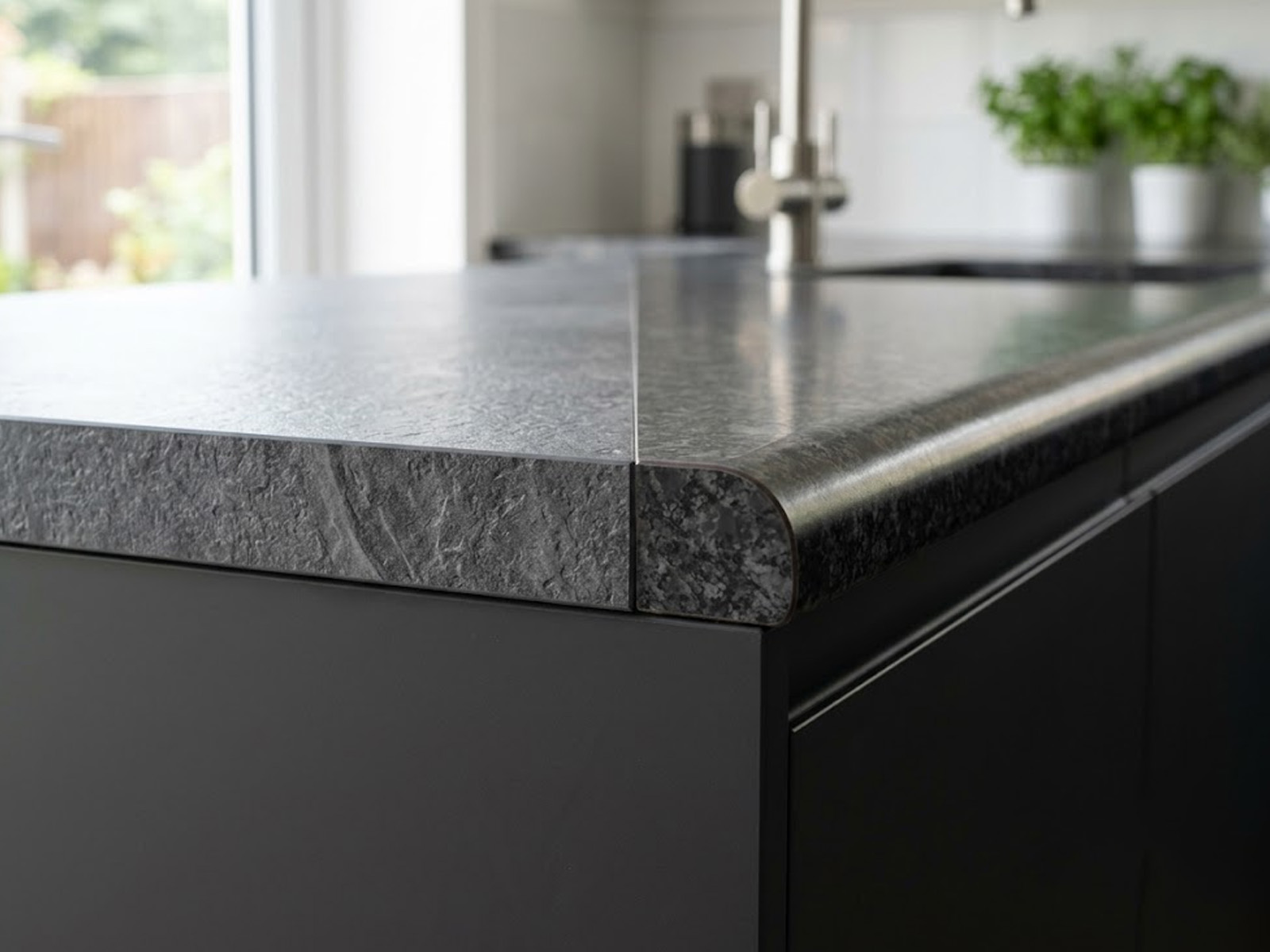
Edge Profile: Choose either a modern 22mm square-edge profile with factory-bonded ABS edge banding or a postformed edge with an uninterrupted wrap-around barrier.
Surface Texture: Opt for registered embossed, matte, or anti-fingerprint textures over cheap, high-gloss prints, as textured finishes hide scratches and wear flawlessly.
Waterproof Sealing: Ensure the supplier utilises polyurethane (PUR) hot-melt adhesive for edge bonding to guarantee a lifetime seal against moisture.
Unpacking the Reality of Best-Quality Laminate Worktops UK
Evaluating the true value of high-pressure composite surfaces requires looking beyond aesthetic designs to the underlying engineering. In our daily operations, we handle hundreds of kitchen projects, and we witness how the quality of raw materials dictates the final result.
Cheap, budget-level laminates rely on low-density particleboard that acts like a sponge when exposed to common kitchen moisture. By contrast, investing in premium Laminate worktops guarantees a high-performance surface that actively resists water, daily impact, and thermal expansion.
Our fabrication team utilizes state-of-the-art workshop machinery to cut, rout, and edge every composite board with absolute millimetre precision. When you buy premium, you are investing in structural integrity, advanced surface coatings, and pristine, factory-sealed edges that protect your home.
High-Pressure Laminate (HPL) vs. Low-Pressure Melamine
The durability of your new kitchen surface is heavily dictated by the specific manufacturing process used to bond the decorative sheet. Cheap utility boards are often finished with low-pressure melamine, which easily chips, stains, and delaminates along the edges under daily kitchen stress.
The best-quality laminate worktops UK homeowners can select are constructed from multiple layers of resin-impregnated kraft paper compressed under immense heat. This creates a dense, impact-resistant shield that repels bacteria, household cleaners, and moderate culinary impacts effortlessly.
The Crucial Role of Core Materials and Edge Profiles
The internal core of your composite board is the most critical element determining the overall lifespan of the kitchen surface. Standard chipboard cores swell rapidly if water penetrates the top seal, leading to warped joints and ruined cabinetry.
Always look for a premium P5 moisture-resistant particleboard core, which contains advanced hydrophobic resins within the timber mix. This internal protection dramatically reduces the rate of water absorption, buying you valuable time to clean up accidental kitchen spills.
Postformed vs. Square-Edge Profiles
When specifying the profile of your composite boards, you must choose between a classic postformed edge or a contemporary square-edge finish. Postformed profiles feature a continuous decorative layer wrapped seamlessly around the front lip, leaving no joint for water to penetrate.
Alternatively, modern square-edge profiles provide a crisp, architectural aesthetic that mimics the monolithic look of premium natural stone or engineered quartz. However, square edges must be finished with heavy-duty ABS edge banding applied using waterproof polyurethane hot-melt adhesive.
Structural Rigidity: Thin Slimline vs. Standard Thicknesses
Modern design trends have introduced ultra-slim 12.5mm and 22mm profiles, which offer a highly sophisticated, minimalist look. While these slimline profiles look exceptional, they require incredibly level base units to prevent the thinner boards from flexing under weight.
Traditional 38mm and 40mm boards are much more forgiving, offering superb structural rigidity across wide spans like breakfast bars. We evaluate your cabinet framework during our digital templating phase to ensure the chosen thickness matches your kitchen’s structural capacity.
Common Installation Mistakes and Moisture Risks
Failing to prepare your kitchen structurally is a guaranteed way to ruin even the highest-quality kitchen surface. The most common mistake we see on-site is unlevel cabinetry, which places immense physical tension across the mason’s mitre joints.
When we join two slabs, the joint must remain completely flat; any cabinet movement will pull the waterproof adhesive apart. Proper level alignment is the absolute foundation of a long-lasting, watertight installation, regardless of your chosen material.
Poor Sink and Tap Selection Errors
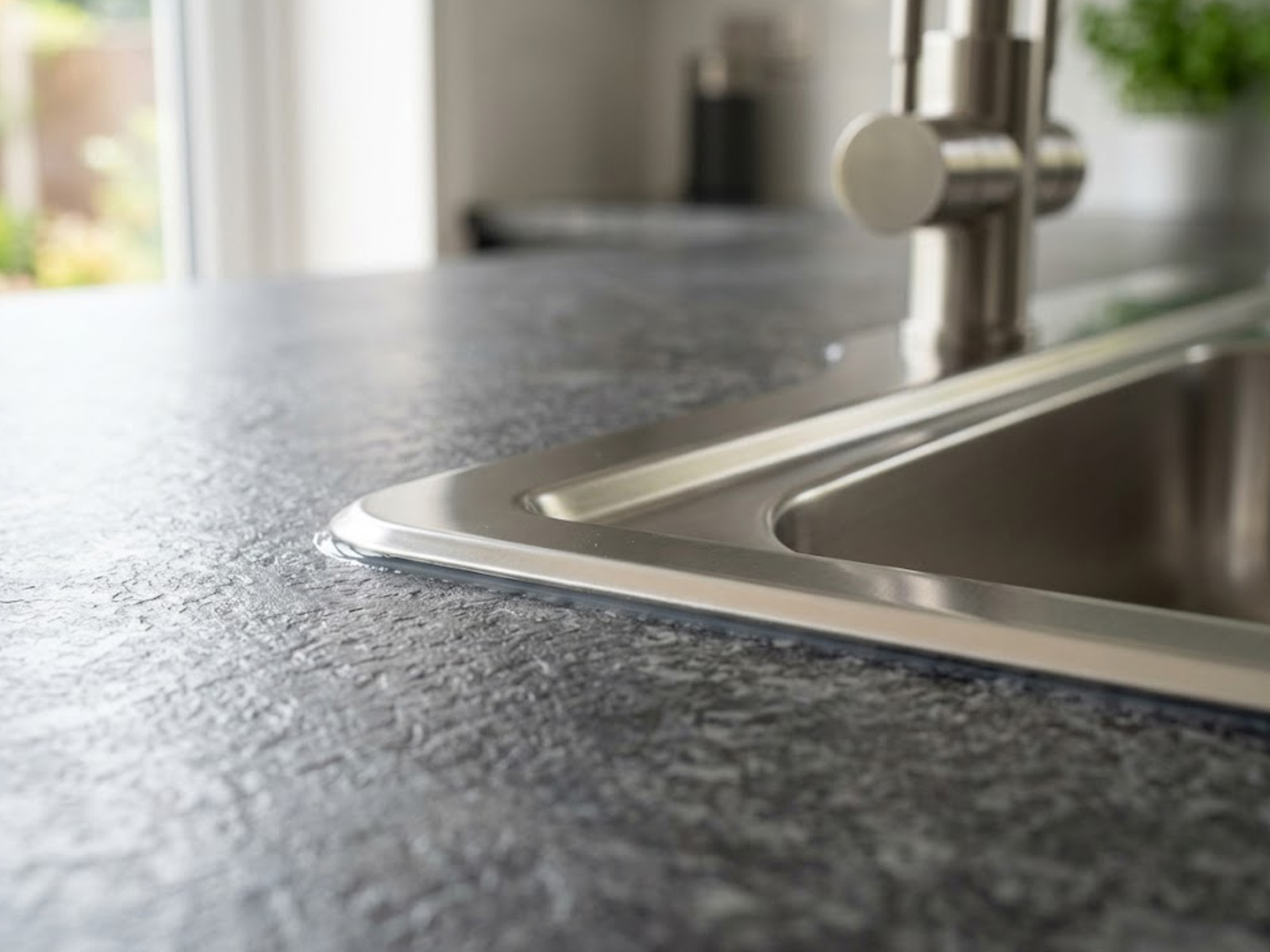
Selecting the wrong plumbing fixtures can quickly destroy a composite worktop’s internal wood-based core. We always advise against installing undermount sinks with standard particleboard-core laminates, as the exposed cut edge will inevitably absorb water and swell.
Instead, always opt for a high-quality drop-in sink with a wide stainless steel lip that overlaps the worktop surface. We seal this overlapping rim with a continuous bead of premium sanitary silicone, blocking moisture from ever reaching the core.
The Importance of Correct Expansion Gaps
Timber-based composite cores naturally expand and contract in response to changing seasonal humidity levels inside British homes. If a worktop is wedged tightly between two solid masonry walls, this expansion will cause the board to buckle and warp.
Our fitting teams strictly maintain a 3mm to 5mm expansion gap around the entire perimeter of the installation. This vital gap is hidden behind matching upstands or wall tiles, allowing the worktop to move safely without compromising the joints.
Technical Maintenance: Protecting the Decorative Surface
While premium surfaces are exceptionally durable, they are not completely indestructible and require basic, sensible care. Understanding how to clean and protect the outer wear layer will directly extend the lifespan of your kitchen counter.
Never use abrasive scouring powders, wire wool, or highly acidic chemicals to clean the decorative surface. These harsh methods leave microscopic scratches that dull the finish and trap cooking grease, making the surface much harder to clean.
Thermal Safety and Scorch Prevention
Unlike natural granite or quartz, high-pressure composite surfaces cannot withstand high heat directly from cooking appliances. Placing a boiling roasting pan directly onto the counter will instantly scorch the protective resin overlay, leaving a permanent blister.
Always utilize heat-resistant wooden trivets, cork mats, or integrated stainless steel hot rods to protect the surface. This simple, disciplined habit ensures the sensitive melamine wear layer remains safely below its critical thermal threshold.
Comparing Laminate Quality and Structural Tiers
To help you allocate your renovation budget effectively, we have compiled a structural comparison of available laminate tiers. Investing slightly more in a premium high-pressure composite protects you from the expense of premature replacement.
| Quality Specification | Entry-Level Laminate | Premium HPL Laminate | Solid Compact Laminate |
| Core Material | Low-density Chipboard | High-density P5 Core | Solid Resin-impregnated Kraft Paper |
| Water Resistance | Low (Vulnerable at edges) | High (Moisture-resistant core) | 100% Waterproof (No wood core) |
| Undermount Sink Safe? | No (Strictly drop-in only) | No (Strictly drop-in only) | Yes (Highly recommended) |
| Typical Lifespan | 2 – 5 Years | 10 – 15 Years | 20+ Years |
Evaluating these distinct specifications ensures you make an informed decision that matches your household’s daily culinary needs. For a detailed breakdown of overall material and installation pricing, consult our comprehensive guide on laminate worktop cost UK.
UK Workshop Safety and Fabrication Regulations
The professional cutting and routing of composite boards generates fine timber dust that must be strictly managed in the workshop. We utilise advanced industrial extraction systems to capture hazardous airborne particulates directly at the cutting source.
Our modern manufacturing facility operates in complete compliance with the workplace safety guidelines set by the gov.uk Health and Safety Executive. This commitment to safety protects our skilled fabricators and guarantees your bespoke surfaces are produced to the highest ethical standards.
Secure Direct-to-Consumer Value with Austin Laminate
Bypassing high-street retail showrooms is the smartest way to secure the finest composite surfaces without paying inflated retail markups. By managing the entire process internally, we eliminate expensive middlemen and unnecessary design commissions.
At Austin Laminate, our direct-to-consumer model ensures you pay solely for premium materials and expert British craftsmanship. We manage the digital laser templating, precision CNC routing, and final professional installation to guarantee absolute quality control.
Request Your Instant Estimate Today
Stop struggling with vague showroom calculations and secure a transparent quotation tailored exactly to your kitchen’s unique dimensions. Our experienced team is ready to guide you through texture selections, matching upstands, and custom edge profiling techniques.
Let our master craftsmen transform your home with guaranteed engineering precision and a highly durable, stunning finish. Submit your kitchen plans today and request an Instant free quote through our secure online portal.