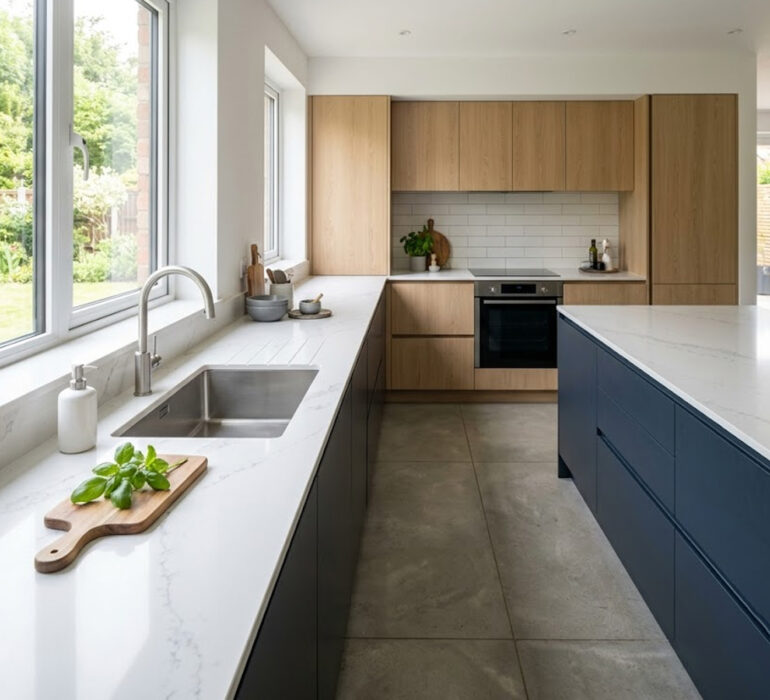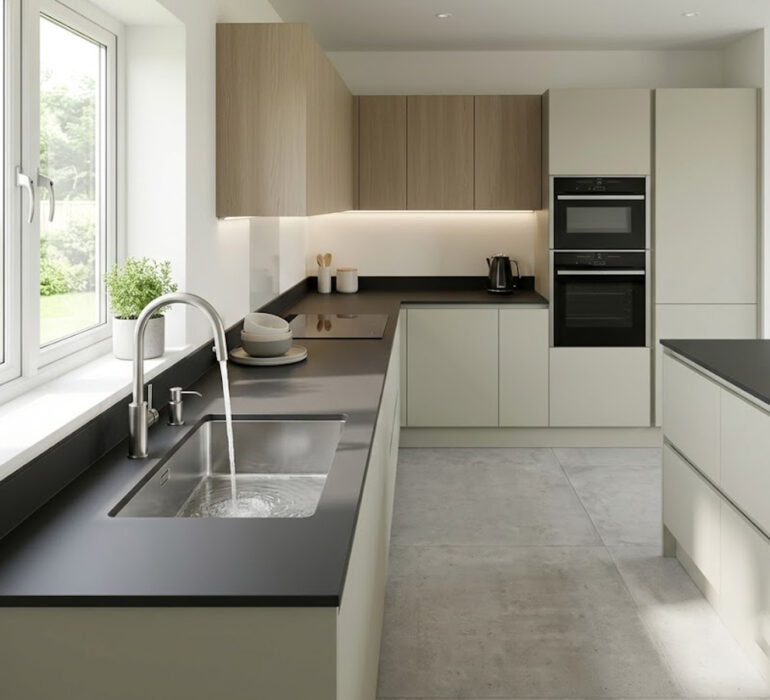
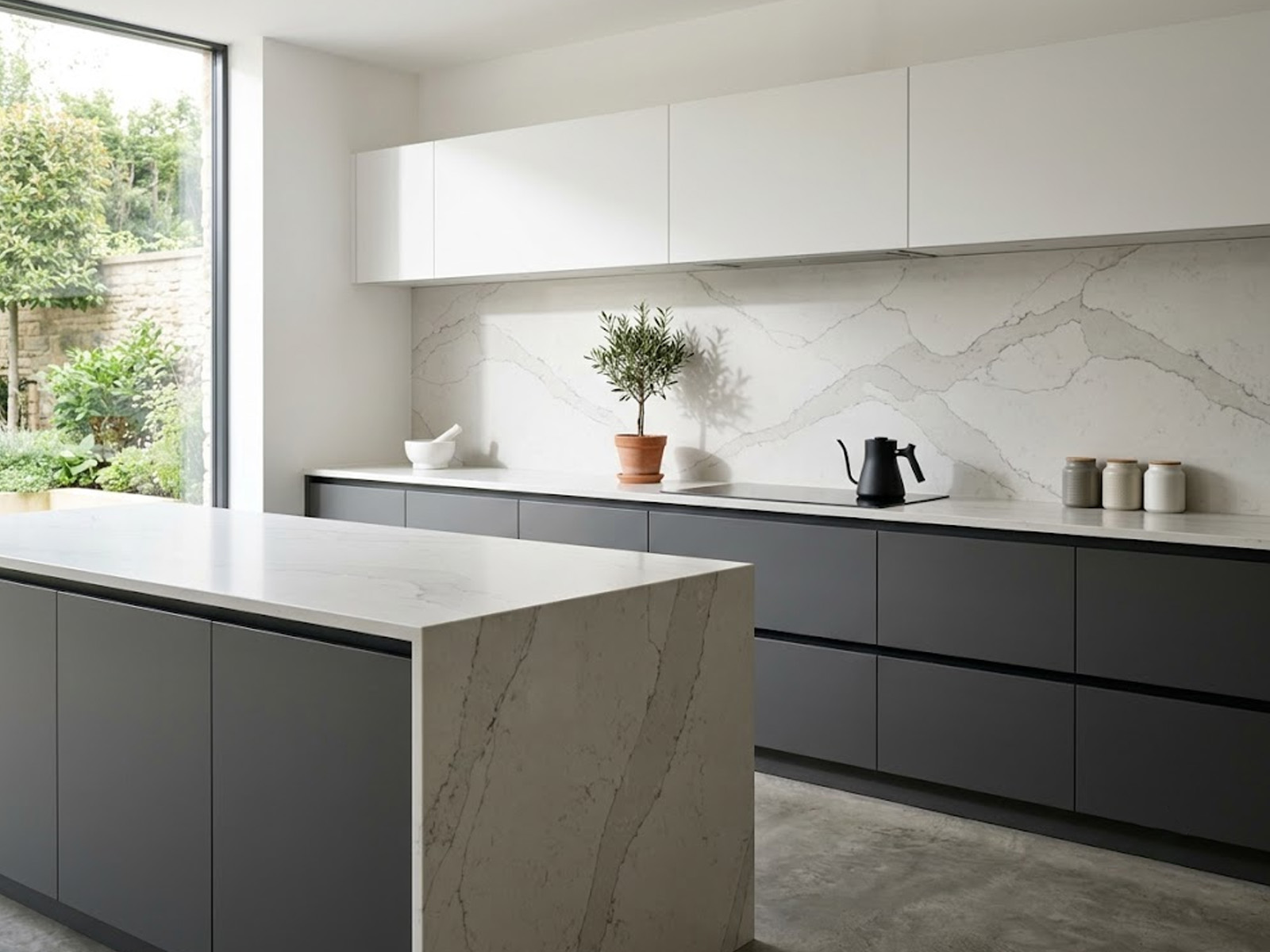
When comparing Silestone vs Caesarstone for your kitchen renovation, both premium brands offer exceptional durability, but they cater to slightly different design priorities.
Silestone: Manufactured by Cosentino, featuring innovative HybriQ+ technology with recycled content, a massive range of colours, and three distinct surface textures (polished, suede, and volcano).
Caesarstone: Renowned for pioneering engineered quartz, offering incredibly realistic natural marble-effect patterns, industrial concrete aesthetics, and superior tactile finishes.
Verdict: Choose Silestone if you want advanced eco-friendly technology and versatile textures, or select Caesarstone if your priority is achieving the absolute pinnacle of realistic, organic veining.
Fabricator Insights on Silestone vs Caesarstone
Deciding between Silestone vs Caesarstone requires looking beyond marketing brochures and assessing how these heavy slabs perform under the CNC cutting blade. As experienced stonemasons, we handle both premium materials daily in our specialised workshop.
We template every custom kitchen layout to strict millimetre tolerances, ensuring a seamless fit against your walls. Both brands utilise high-pressure compression techniques to eliminate internal air pockets, producing structurally dense slabs that resist cracking.
However, the slight differences in their synthetic binder formulations can subtly affect how the edges respond to custom profiling. Achieving a perfectly smooth pencil or bullnose edge requires our team to calibrate our wet-cutting speeds with absolute precision.
The Technological Battle: Cosentino HybriQ+ vs Caesarstone Pioneering
The manufacturing science of Silestone vs Caesarstone highlights two completely different approaches to modern stone engineering. Silestone utilises Cosentino’s proprietary HybriQ+ technology, which significantly alters the composition of the slab.
This advanced process replaces a large portion of crystalline silica with a blend of premium recycled minerals and glass. This eco-friendly shift helps fabricators comply with strict occupational health rules while maintaining the material’s legendary scratch resistance.
Conversely, Caesarstone continues to refine the traditional vibro-compression method they pioneered in the late 1980s. Their slabs maintain a highly consistent ratio of natural quartz aggregates to polymer resins, ensuring outstanding structural rigidity across vast spans.
Environmental Impact and Workplace Safety
Workplace safety is a major factor in the UK stone industry, particularly regarding the control of hazardous crystalline silica dust. Cutting dense engineered materials demands strict adherence to wet-processing techniques to protect workshop staff.
At our modern facility, we operate in complete compliance with the occupational safety guidelines enforced by the gov.uk Health and Safety Executive. Silestone’s HybriQ+ slabs, with their reduced silica content, represent a progressive step forward for workplace safety.
Furthermore, utilising recycled water and renewable energy during the manufacturing phases makes Silestone highly appealing to eco-conscious homeowners. Caesarstone has also adapted, introducing low-silica product lines to meet evolving global environmental standards.
Comparing Aesthetics: Textures, Colours, and Veining
When clients compare silestone vs caesarstone in our showroom, their final decision usually comes down to visual texture. Both brands excel at mimicking natural stone, but they achieve their looks through different aesthetic styles.
Silestone is highly celebrated for its diverse texture options, offering polished, suede (matte), and volcano (rugged) finishes. This variety allows you to customise the tactile experience of your Bespoke quartz worktops to match your cabinetry.
Caesarstone, meanwhile, is widely regarded as the industry master of organic, irregular veining patterns and realistic concrete finishes. Their supernatural collection captures the chaotic beauty of raw quarried marble without any of its frustrating structural weaknesses.
Suede Finish vs Concrete Matte Textures
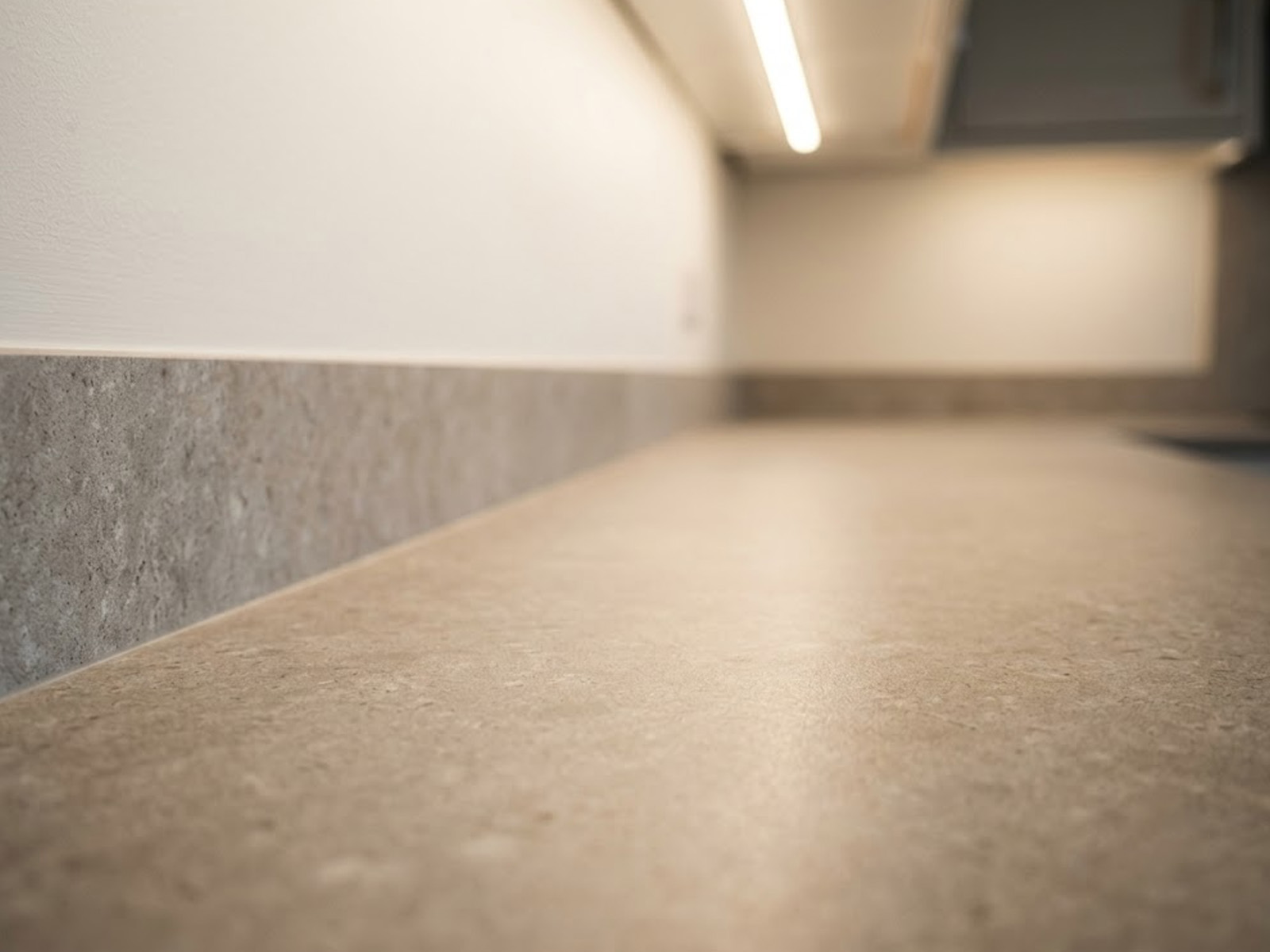
Silestone’s Suede texture is an exceptionally smooth, soft-touch matte finish that behaves beautifully under warm under-cabinet LED lighting. It diffuses light gently, preventing the harsh, glaring reflections often associated with highly polished kitchen surfaces.
Caesarstone’s matte and concrete finishes offer a slightly more textured, raw tactile feel that perfectly complements modern industrial spaces. However, these organic textures require a slightly more frequent cleaning routine to keep grease smudges at bay.
Durability and Daily Maintenance Realities
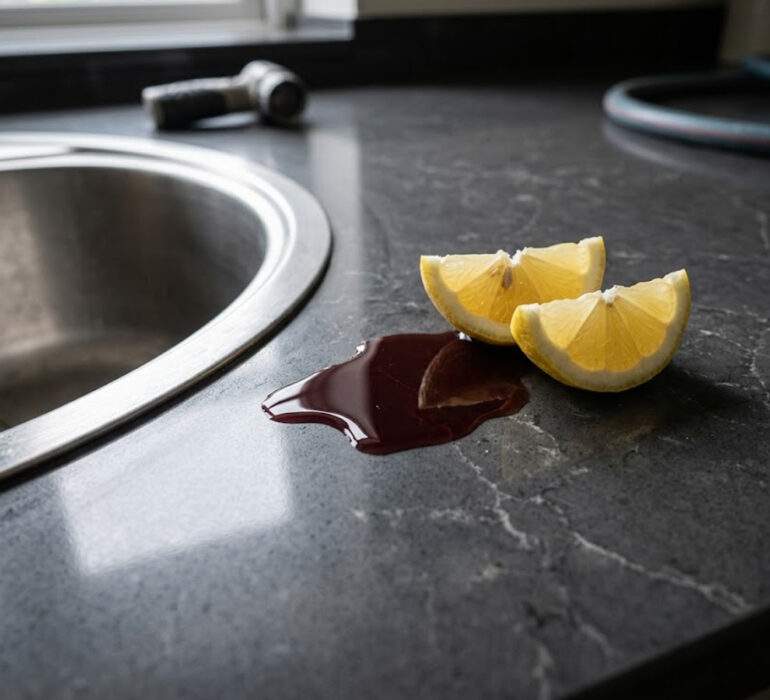
Evaluating the daily resilience of Silestone vs Caesarstone reveals that both premium brands easily outperform natural granite and marble. Their non-porous surfaces ensure that spilt wine, lemon juice, or coffee cannot penetrate the core to cause staining.
Because both materials are bound with synthetic resins, they require absolutely no annual chemical sealing or specialist waxing. A simple routine using warm water and a mild, pH-neutral dish soap is entirely sufficient to keep them looking pristine.
However, neither brand is completely heat-proof, as extreme thermal shock can scorch or crack the internal polymer binders. To protect your worktops, always use protective wooden trivets or integrated metal rails near your cooking hob.
Dealing with Stubborn Food Spills Safely
A common mistake homeowners make is using abrasive scouring powders or metal blades to scrape away dried-on grease. These aggressive cleaning tools can micro-scratch the polished surface, permanently dulling the stone’s factory finish.
For safe, stonemason-approved cleaning tips, check out our guide on how to clean quartz worktops. Using the correct cleaning methods preserves the beautiful sheen of your worktops for decades.
Cost Analysis: Silestone vs Caesarstone Investment
Analysing the budget required for Silestone vs Caesarstone reveals that both occupy the premium tier of the UK market. The final price of your project is heavily influenced by the specific design collection and material thickness you select.
Choosing between 20mm and 30mm profiles will also alter your total material costs and structural support requirements. For a detailed cost breakdown of stone renovations, refer to our comprehensive article on Quartz Worktop Costs in the UK.
| Feature Comparison | Silestone Quartz Slabs | Caesarstone Quartz Slabs |
| Silica Formulation | HybriQ+ (Reduced silica content) | Traditional & Low-Silica options |
| Surface Textures | Polished, Suede, Volcano | Polished, Honed, Concrete, Rough |
| Warranty Length | 25-Year transferable warranty | Lifetime residential warranty |
| Material Thicknesses | 12mm, 20mm, 30mm | 13mm, 20mm, 30mm |
Bypassing High-Street Showroom Markups
Securing the best value for your chosen premium brand means avoiding expensive retail showrooms that inflate prices with massive middlemen margins. Because we handle every single step internally, we can offer highly competitive pricing structures on all premium stones.
At Austin Laminate Countertops, our direct-to-consumer approach means we manage the digital templating, the CNC cutting, and the final installation. This streamlined model guarantees absolute quality control and ensures your surfaces are fitted with absolute engineering precision.
The Importance of Precise Templating and Level Cabinets
The ultimate success of your installation relies entirely on the quality of the preparation work completed before the stone arrives. Because engineered stone is incredibly heavy, it requires robust, perfectly level cabinetry to prevent future stress fractures.
If our fitting team detects that your base cabinets are unlevel, the installation cannot proceed safely. Placing rigid stone onto uneven supports creates physical tension points, which can cause the slab to crack near cutouts or joints.
We utilise advanced digital laser templating to map your kitchen layout down to strict millimetre tolerances before cutting. This precise approach ensures clean, minimal joint lines and consistent overhangs across your entire cabinetry layout.
Final Verdict: Choosing Between Silestone vs Caesarstone
Ultimately, deciding between Silestone vs Caesarstone comes down to matching their unique product strengths with your personal design goals. If you prioritise eco-friendly manufacturing, diverse textures, and a 25-year warranty, Silestone is an outstanding choice.
However, if you are seeking the absolute pinnacle of realistic marble veining and tactile industrial concrete finishes, Caesarstone remains the gold standard. Both premium brands will dramatically elevate the luxury, functionality, and value of your home for decades.
Secure Your Professional Stone Estimate Today
Stop guessing about your upcoming renovation costs and get a transparent, highly accurate quotation tailored to your kitchen’s unique dimensions. Our in-house specialists are ready to guide you through thickness options, edge profiles, and colour selections.
Submit your kitchen plans or dimensions today and schedule your professional digital laser survey by requesting a Free Quote through our secure portal. Let our master stonemasons transform your kitchen with guaranteed engineering precision and direct-to-consumer value.