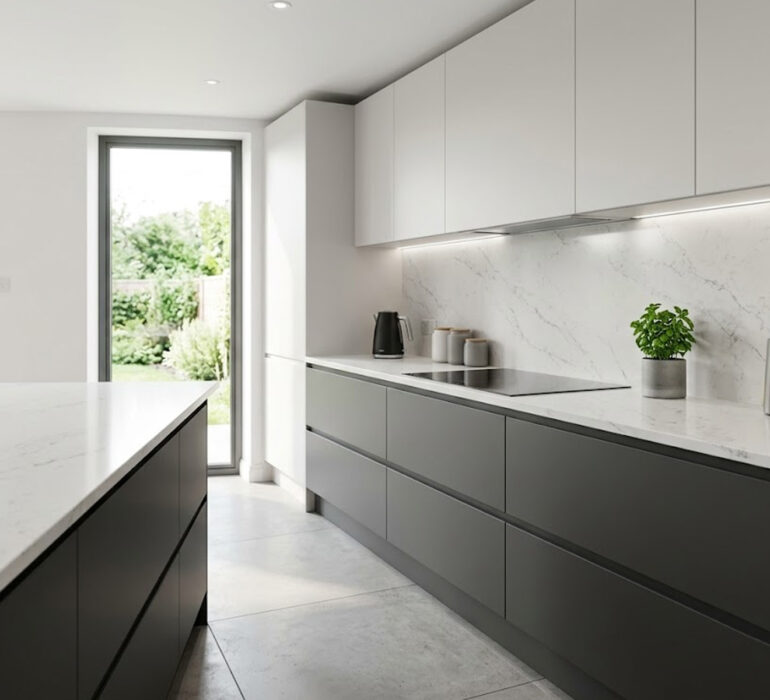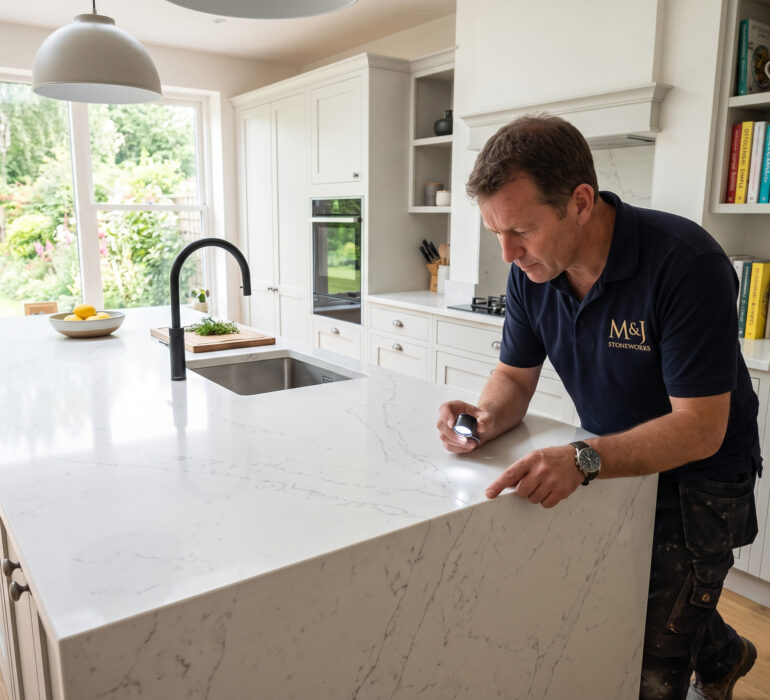
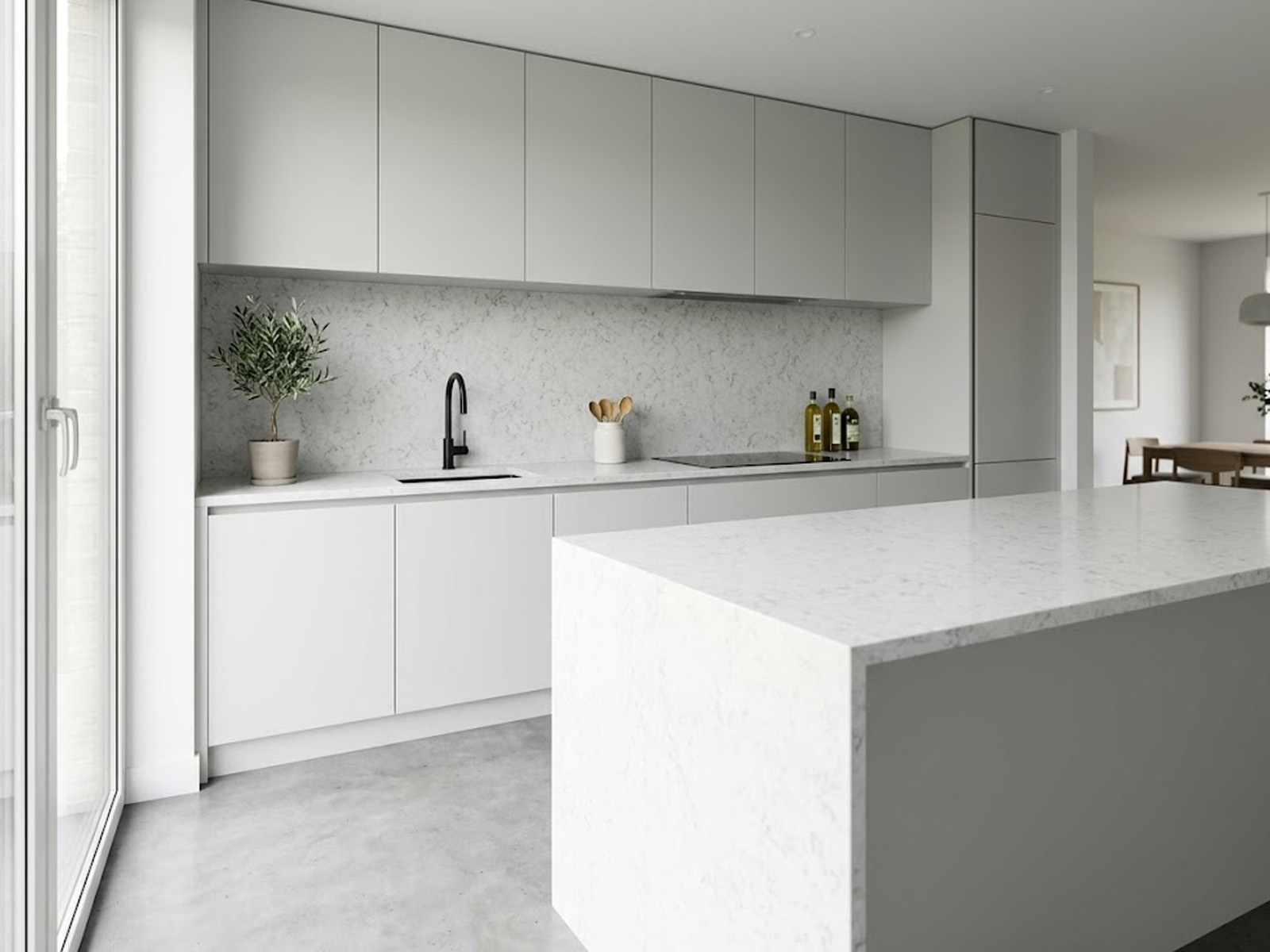
Yes, joints are physically present and slightly visible on quartz worktops, as it is impossible to fuse solid engineered stone slabs together without a seam. However, a highly skilled stonemason utilising digital templating, colour-matched epoxy resin, and professional seam setters can make these joints practically inconspicuous to the naked eye.
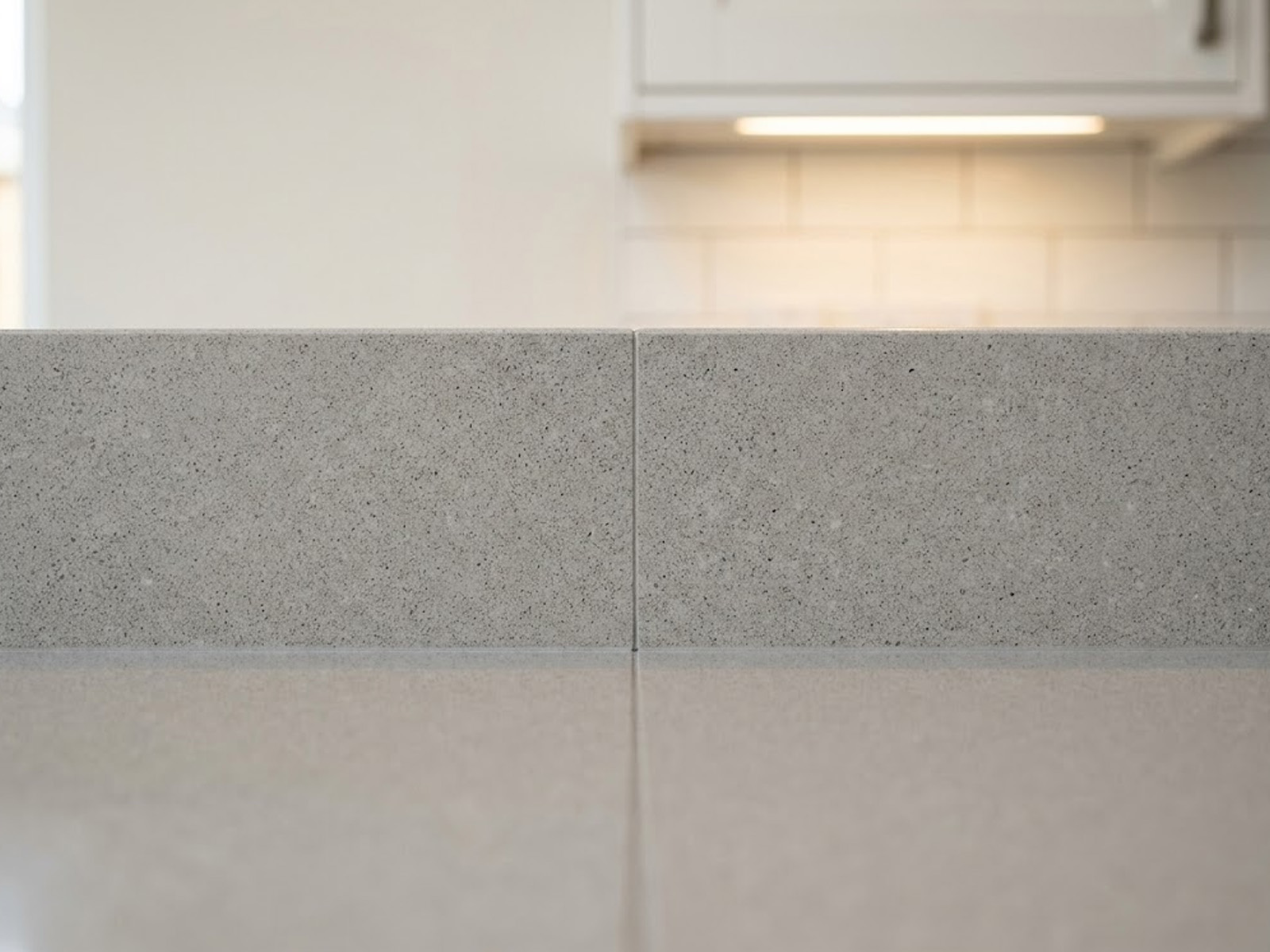
Average Seam Width: Properly fabricated joints are extremely narrow, measuring less than 1.5 millimetres across.
Tactile Feel: A professionally fitted joint is completely flat, smooth, and level, with zero catching or jagged edges.
Visual Factors: Solid, lighter colours make seams harder to see, whereas complex Calacatta patterns require expert vein matching.
Hygienic Seal: The seam is completely filled with waterproof adhesive, ensuring no food particles or bacteria can penetrate.
Every modern kitchen design requiring a layout longer than three metres will inevitably have seams. Understanding how quartz worktop joints visible in your home behave is essential for setting realistic design expectations before your fitting day.
The physical limitations of transporting vast slabs mean we cannot deliver single pieces that span the entire length of large open-plan kitchens. Slabs typically measure around three metres in length, meaning long runs, L-shaped corners, and breakfast bars require strategic cuts.
When we plan a kitchen layout, we focus heavily on locating these seams in discrete, structurally sound areas. A poorly positioned seam not only compromises the visual flow of your workspace but can also lead to structural failures over time.
How Material Patterns Affect Quartz Worktop Joints Visibly
The intricate patterns, veining, and base colours of your selected stone play a monumental role in how prominent your joint will look. Solid greys, warm taupes, and fine-grained patterns are exceptionally forgiving, allowing us to blend the seam seamlessly into the background.
If you choose a highly complex, heavily veined Calacatta marble design, matching the veins across a joint is a complex task. We must carefully align the sweeping patterns during the cutting phase to avoid a jarring, artificial visual break in your kitchen island.
We always advise clients selecting these dramatic designs to review our guide on popular quartz worktop colours in the UK. Selecting the perfect pattern ensures that your joint lines complement, rather than disrupt, your kitchen’s natural design.
Solid and Fine-Grained Quartz Patterns
Fine-grained textures or solid colours are the easiest to join because they do not have linear directional patterns that can misalign. The uniform distribution of quartz crystals across the seam makes the joint practically disappear when filled with a colour-matched adhesive.
We routinely install these simpler designs in contemporary galley kitchens, ensuring the focus remains on the clean lines of the cabinetry. These uniform options are ideal for property owners who prioritise a completely uninterrupted, monolithic surface aesthetic.
Heavily Veined Calacatta and Carrara Designs
Marble-effect slabs require a highly artistic eye and advanced digital templating to ensure the bold grey or gold veins flow naturally across the seam. Without careful planning in our workshop, a joint can make the pattern look disconnected, ruining the luxurious aesthetic.
To achieve a flawless flow, we often need to cut multiple pieces from consecutive slabs, which can slightly increase the total material required. If you are researching these high-end options, review Bespoke quartz worktops to see how we manage veining.
Technical Factors That Control Quartz Worktop Joint Visibility
The visual success of any stone seam is directly dictated by the precision of the manufacturing machinery and the skill of the installers. At our workshop, we utilise advanced water-jet CNC cutters to achieve incredibly clean, straight edges that are completely free from microscopic chips.
Even minor chipping along the cut edge will trap the tinted epoxy, creating a dark, jagged line that makes the joint highly prominent. Hand-cutting stone on-site with manual tools cannot replicate this factory-level precision, which is why in-house fabrication is mandatory.
Once the stone arrives at your home, our installers use specialised mechanical seam-setting tools to pull the pieces together under immense pressure. These suction-cup devices level the slabs perfectly while the chemical resin cures, eliminating any slight height differences.
The Role of Colour-Matched Epoxy Resin
We do not use standard clear silicone to join premium stone surfaces; instead, we utilise advanced two-part structural epoxy resins. We manually mix specific colourants to match both the base background of the slab and any accent veining running through the seam.
This colour-matching process is a true craft, requiring a keen eye for tone, depth, and the reflective properties of the engineered stone. Once the resin is packed into the joint and fully cured, we carefully shave away the excess to leave a completely flush finish.
For a detailed walkthrough of the physical installation process, consult What to Expect During a Professional Quartz Worktop Installation. Understanding this sequence highlights the level of care required to deliver an immaculate, smooth joint.
The Critical Need for Perfectly Level Base Cabinets
A common, costly mistake that compromises a joint is placing heavy stone slabs onto unlevel wooden kitchen cabinetry. If the base cabinets dip by even a single millimetre across the layout, it places the rigid stone under permanent physical tension.
This tension makes it impossible to align the joint flat, leading to “lippage,” where one side of the seam sits slightly higher than the other. This uneven edge will quickly chip when struck by sliding pots, highlighting why cabinet preparation is vital.
We always verify the levelness of your supporting carcasses during our initial digital laser survey to prevent these fitting issues. Proper preparation ensures that your cabinets are structurally ready to support the immense weight of your new surfaces safely.
Comparing Joint Quality Across Different Kitchen Worktop Materials
Different kitchen surfaces react uniquely to the seaming process, with engineered stone delivering the most sanitary and robust joints. While laminate is prone to water damage at the seams, engineered quartz remains completely non-porous and waterproof.
We consistently find that engineered surfaces easily outperform natural granite when it comes to creating unnoticeable, tight seams. The table below compares the typical joint widths, sealing requirements, and overall hygiene levels of popular kitchen worktops.
| Material Type | Average Joint Width | Joint Waterproofing | Sealing Required at Joint |
| Engineered Quartz | < 1.5 mm (Very tight) | 100% Waterproof | Never |
| Natural Granite | 1.5 mm – 2.5 mm | Waterproof (epoxy-sealed) | Annually |
| Laminate | 1.5 mm – 2.0 mm | Vulnerable to water swelling | Edge sealant required |
Why Porosity Matters for Joint Longevity
Natural granite is naturally porous, meaning that moisture can slowly seep into the edges around a joint if the chemical sealant degrades. Over time, this water ingress can discolour the stone or weaken the adhesive bond, leading to a visible separation of the seam.
Because engineered stone is non-porous, the colour-matched epoxy forms a permanent, impenetrable bond that resists bacteria and moisture. To learn more about how these structural differences impact maintenance, read our comparison of quartz vs granite worktops.
Preventing Damage and Stains Along Your Quartz Worktop Joints
Once your worktop is installed, caring for the joint line properly will keep the seam looking immaculate and sanitary for decades. The cured resin adhesive is highly durable but remains slightly more sensitive to chemical cleaners than the engineered stone itself.
You should avoid scrubbing the joint line with abrasive scourers or using highly acidic or alkaline chemicals like neat bleach. To understand safe maintenance practices, read our comprehensive guide on how to clean quartz worktops.
Additionally, never place intense heat sources, such as a boiling hot pan or a slow cooker, directly over or near a joint. Extreme thermal shock can cause the resin adhesive to scorch or crack, weakening the seam and requiring professional repair.
Heat Protection and Thermal Shock Prevention
While engineered stone is highly durable, the polymer resins used to bind the quartz crystals together are sensitive to thermal shock. Placing hot pans on a cold worktop can cause localised expansion, placing immense physical stress on the nearest joint.
We always instruct clients to use protective wooden trivets or integrated metal bars near their hobs to protect the stone. For more detailed safety guidelines regarding heat, see our expert article Can You Put Hot Pans Directly on Quartz Worktops?.
Establishing these basic habits preserves both the structural integrity of your seams and the warranty of your stone surfaces. It ensures your kitchen remains a safe, highly hygienic environment for daily food preparation and cooking.
Safe Fabrication Practices and UK Safety Standards
Processing dense engineered stone generates fine crystalline silica dust, which must be managed strictly to protect health and safety. Our modern fabrication facility utilises advanced wet-cutting CNC machinery to suppress this dust completely during production.
Our workshop operates in absolute compliance with the rigorous occupational safety regulations enforced by the gov.uk Health and Safety Executive. This unwavering commitment guarantees a safe working environment for our skilled stonemasons and an uncontaminated product for your home.
Adhering to these strict standards ensures your bespoke worktops are cut, polished, and joined using the safest industry techniques. It reflects our dedication to delivering craftsmanship that is both beautiful and manufactured to the highest ethical standards.
The Austin Direct-to-Consumer Value Proposition
Choosing an independent, direct-to-consumer fabricator is the best way to secure premium stone surfaces without paying inflated showroom prices. By managing the entire process internally, we eliminate expensive middlemen markups and retail commissions.
At Austin Laminate Countertops, we handle digital laser templating, CNC cutting, edge profiling, and final installation ourselves. This streamlined model allows us to offer premium materials and impeccable joint precision at a highly competitive price point.
Secure Your Precision Kitchen Estimate Today
Stop guessing about your upcoming renovation costs and get a transparent, highly accurate quotation tailored to your kitchen’s unique dimensions. Our in-house team is ready to guide you through material thickness options, colour selections, and joint placement strategies.
Submit your kitchen plans or dimensions today to receive an accurate, competitive estimate by requesting a Free Quote through our secure portal. Let our master stonemasons transform your kitchen with guaranteed engineering precision and direct-to-consumer value.