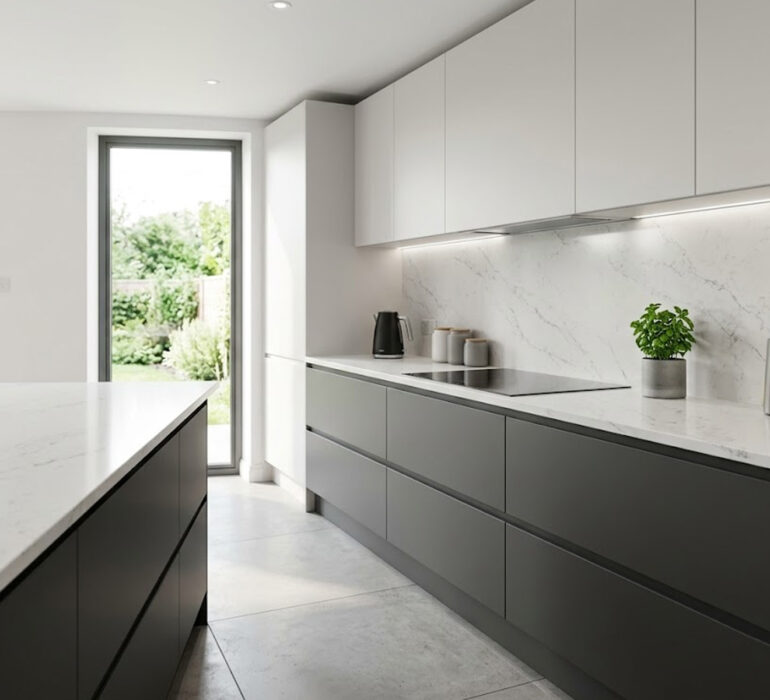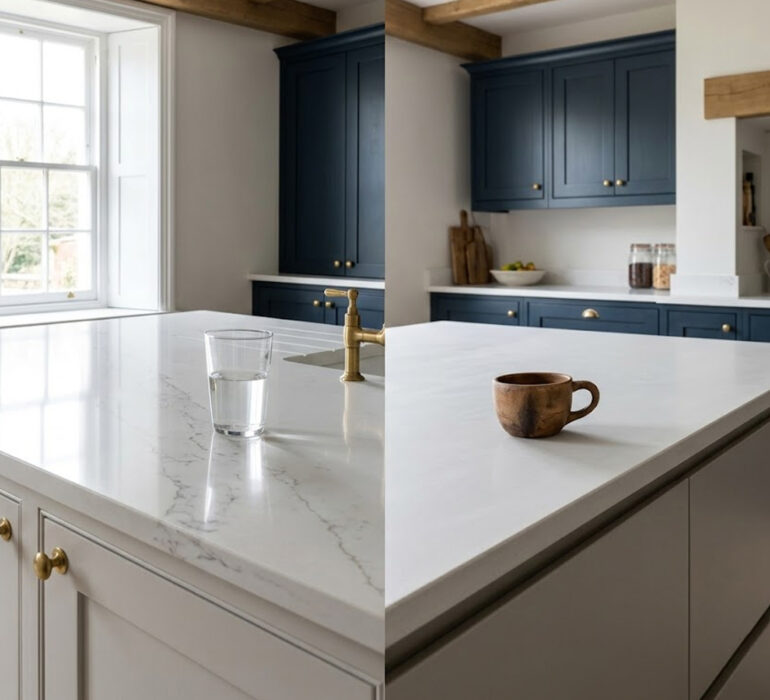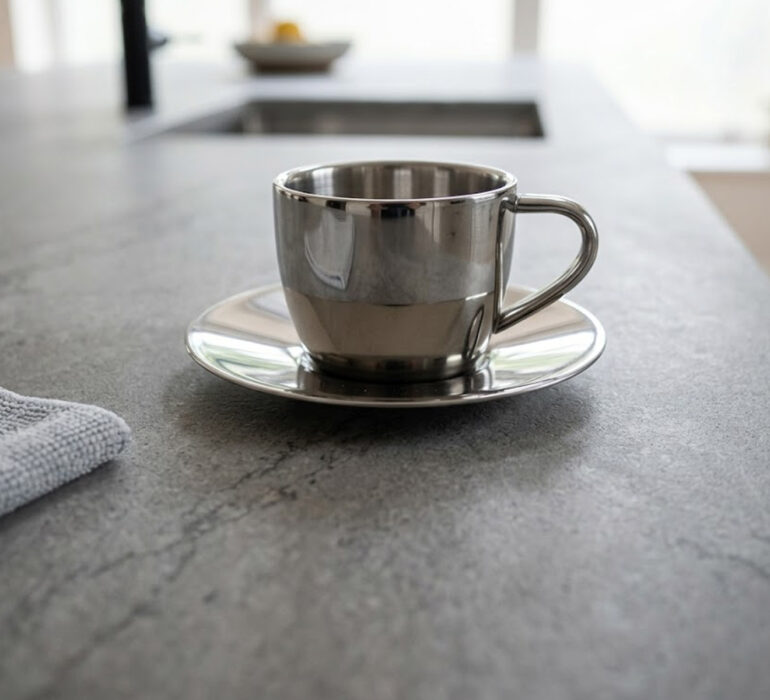
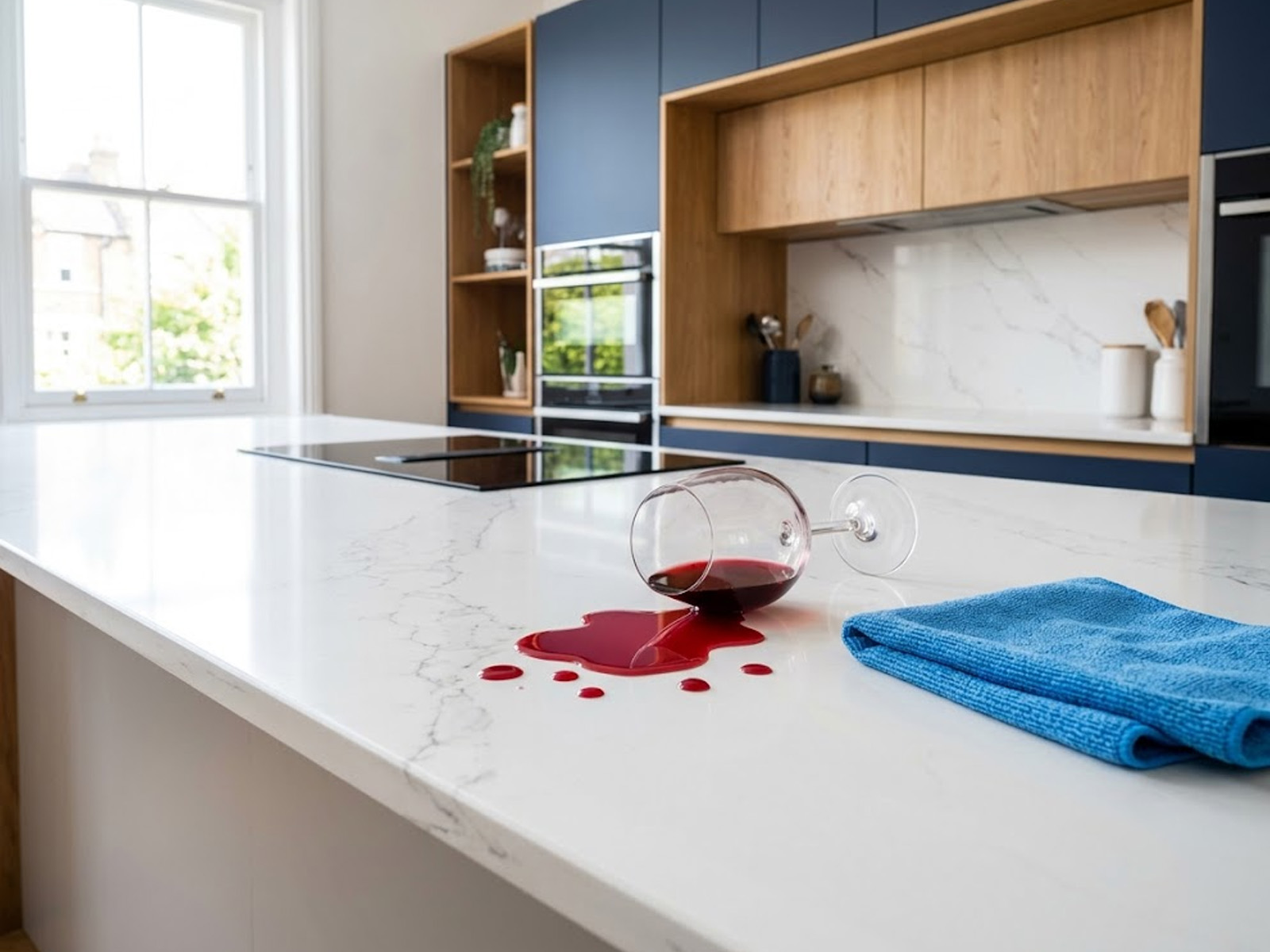
When property owners ask do quartz worktops stain, the definitive answer is no, not under normal kitchen conditions. Engineered quartz is exceptionally stain-resistant due to its unique manufacturing process.
Zero Porosity: Polymer resins bind the crushed minerals, creating a 100% non-porous surface that strictly repels liquids.
No Sealing Required: Unlike natural granite, you never need to apply chemical sealants to prevent spillages from penetrating the stone.
Surface Vulnerability: While the stone itself does not stain, highly acidic or caustic chemicals can chemically burn or bleach the resin binder.
Instant Cleaning: Simply wiping everyday culinary spills like wine, coffee, or curry paste with warm soapy water prevents any sticky residue buildup.
Why People Ask: Do Quartz Worktops Stain Frequently?
The primary reason clients constantly ask do quartz worktops stain is due to confusing engineered stone with highly porous natural marble. Natural stones possess microscopic fissures that readily absorb red wine and lemon juice, leading to permanent, deeply ingrained discolouration.
Because engineered stone consists of roughly 90% natural quartz blended with advanced polymer resins, those microscopic pores are completely sealed. This industrial fabrication process guarantees an impenetrable surface, ensuring your bespoke kitchen island effortlessly repels daily culinary accidents.
The Role of Polymer Resins in Preventing Marks
When assessing if these engineered surfaces stain, you must understand the vital role that synthetic polymer resins play in the slab’s structural integrity. These advanced resins act as a permanent, impenetrable shield, completely locking out moisture and bacteria from the core of the heavy material.
As master stonemasons, we rely on this predictable resin structure when CNC milling precise draining grooves and recessed sink cutouts. This internal consistency means even the freshly cut, unpolished edges around your under-mount sink remain highly resistant to water ingress.
Common Culinary Spillages and Do Quartz Worktops Stain?
To practically answer ‘Do quartz worktops stain?’, we must look at how the surface reacts to the most aggressive ingredients found in British kitchens. Turmeric, beetroot juice, and strongly brewed tea are notorious for ruining traditional high-pressure laminates and unsealed natural timber surfaces.
On an engineered stone surface, these heavily pigmented liquids simply pool on the top layer without ever sinking into the material itself. You can easily wipe away the vibrant liquid hours later, though we always recommend prompt cleaning to avoid the pigments drying into a sticky residue.
Dealing with Dried Spillages Correctly
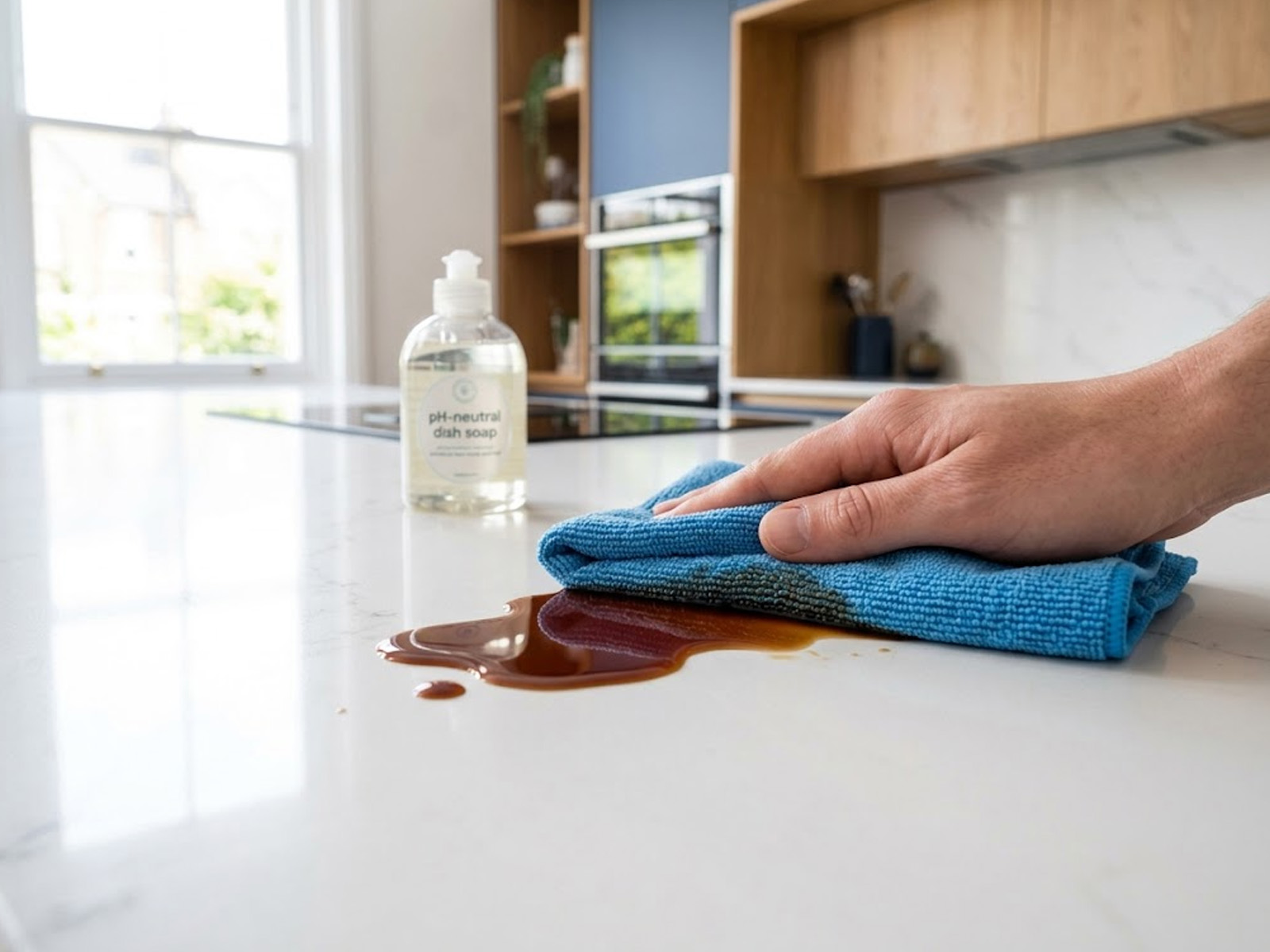
A frequent issue causing homeowners to wonder about surface staining is when they mistake dried-on food residue for a permanent discolouration. A hardened splash of dark espresso or sticky red wine can mimic a deep blemish, particularly on lighter, marble-effect slab designs.
Instead of aggressively scrubbing the surface, apply a specialist pH-neutral cleaner and allow it to dwell for several minutes to break down the sugars. Never use abrasive scouring pads or metal blades, as these will permanently scratch the polished factory finish of your bespoke Quartz worktops.
Chemical Damage Versus True Discolouration
A critical distinction when discussing ‘do quartz worktops stain?’ is understanding the massive difference between a liquid penetrating the stone and a chemical burn. True stains happen when a liquid sinks into the pores of a material, which is physically impossible with dense, engineered composite slabs.
However, exposing your kitchen surface to harsh supermarket descalers, oven cleaners, or neat bleach will actively dissolve the protective polymer resins. This aggressive chemical reaction leaves a cloudy, dull white patch that homeowners mistakenly identify as a stubborn stain, but it is actually permanent structural damage.
Mistakes to Avoid During Daily Maintenance
We regularly inspect failing installations where clients have ruined their surfaces because they did not understand how to safely maintain engineered stone. Using highly acidic multi-surface sprays degrades the protective barrier daily, eventually leading to a complete loss of the brilliant, factory-applied sheen.
To preserve your investment, stick strictly to warm water and a mild, non-abrasive dish soap applied with a soft microfibre cloth. For a comprehensive breakdown of proper cleaning routines, review our detailed guide on how to clean and maintain your quartz worktops safely.
Comparing Materials: Do Quartz Worktops Stain More Than Granite?
When clients ask do quartz worktops stain more easily than natural granite, we always point to the strict necessity of chemical sealants. Natural granite requires a professional sealing treatment every twelve months to actively prevent bacteria and deeply coloured liquids from ruining the raw stone.
Engineered surfaces completely bypass this frustrating, ongoing maintenance loop, making them vastly superior for fast-paced, modern family households. The table below illustrates how different premium kitchen materials react to daily spills and chemical exposure.
| Kitchen Surface Material | Porosity Level | Stain Resistance | Maintenance Requirement |
| Engineered Quartz | 100% Non-Porous | Exceptionally High | Wipe clean with soapy water |
| Natural Granite | Naturally Porous | High (If sealed correctly) | Annual chemical sealing |
| Solid Marble | Highly Porous | Very Low | Strict, frequent sealing |
Fabrication Standards and Health Regulations
The incredible density that prevents liquids from sinking in also means cutting these slabs generates highly hazardous crystalline silica dust. As a responsible fabricator, we must strictly control this fine particulate matter using industrial wet-cutting CNC machinery and advanced air filtration.
Our in-house fabrication facility operates in absolute compliance with the strict workplace safety standards enforced by the gov.uk Health and Safety Executive. This unwavering commitment guarantees our skilled stonemasons work safely while delivering perfectly milled, uncontaminated bespoke surfaces directly to your property.
Why Millimetre Precision Matters for Hygiene
A poorly fitted kitchen surface creates unhygienic dirt traps, which is just as problematic as worrying about daily culinary stains. If the base cabinets are unlevel during installation, the rigid stone slabs will not join perfectly, leaving unsightly, bacteria-harbouring gaps between the pieces.
We utilise advanced digital templating tools to measure your room to strict millimetre tolerances before manufacturing ever begins. This rigorous engineering approach ensures completely seamless, tight joints that are incredibly easy to wipe down and keep perfectly sanitised.
Direct Fabrication Eliminates Middleman Markups
Securing a hygienic, highly durable surface shouldn’t require paying inflated retail prices just to display premium stone in your home. Because we handle everything internally, we consistently offer superior pricing structures compared to high-street showrooms that outsource their cutting and fitting.
By managing the entire process, Austin Laminate Countertops guarantees uncompromising quality control from the initial digital laser survey to the final installation. Our direct-to-consumer model means you invest purely in premium materials and master craftsmanship, completely avoiding hidden external margins.
Secure Your Bespoke Kitchen Quote Today
Stop worrying about potential kitchen stains and start planning your luxurious, low-maintenance renovation with true industry experts. Our dedicated team will carefully guide you through the material selection process, ensuring you choose the perfect stone to match your demanding lifestyle.
Submit your precise kitchen dimensions today and receive an accurate, transparent quotation by requesting a Free Quote through our secure portal. Let our master stonemasons provide a flawless, precision-fitted surface that effortlessly withstands decades of heavy culinary use.