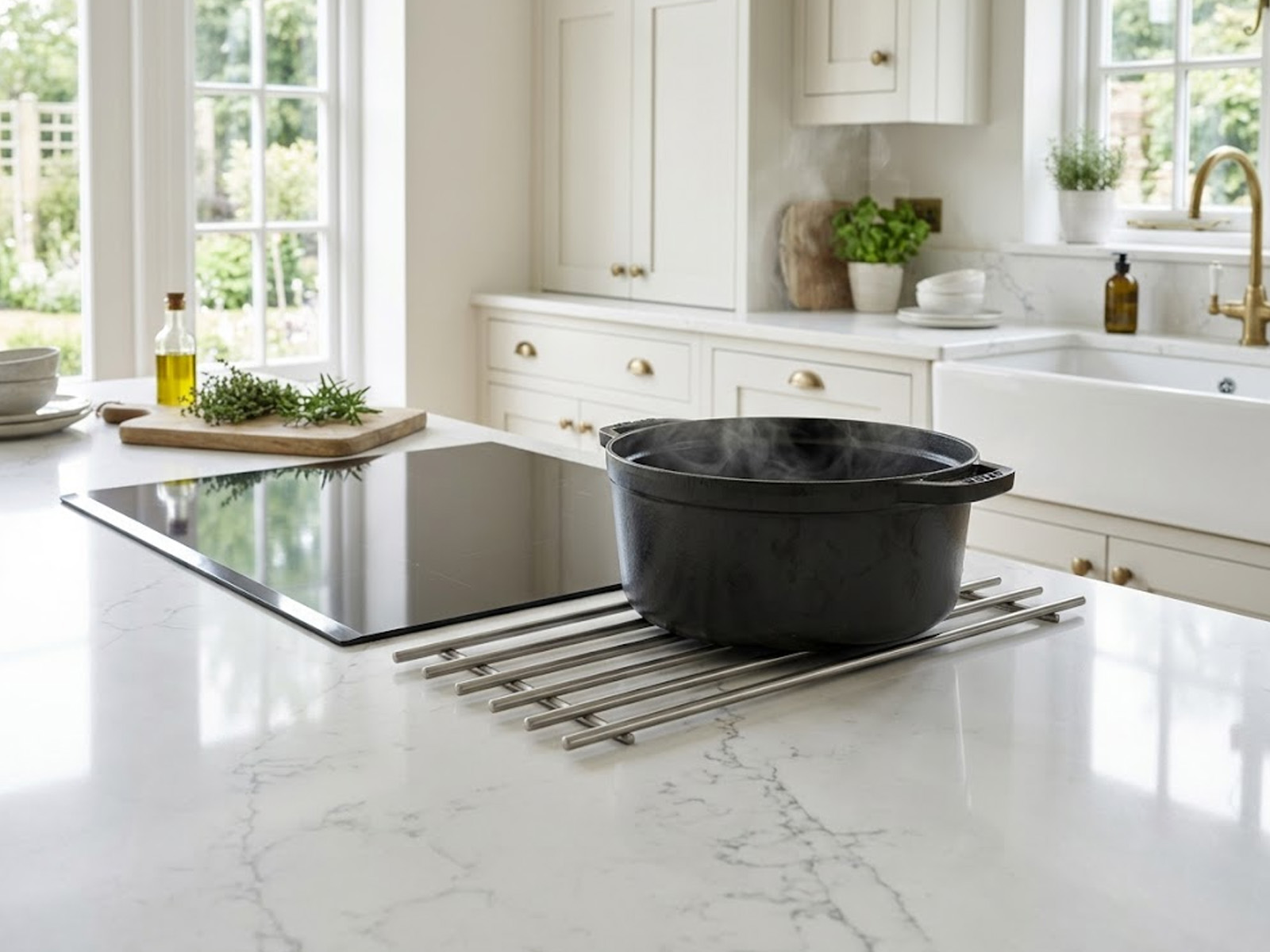
No, you should never place hot pans directly onto quartz surfaces. While the natural stone minerals within the slab can withstand high temperatures, the polymer resins used to bind the composite material together will easily scorch, discolour, or crack.
Resin Damage: Intense heat exceeding 150°C melts the synthetic binding resins, leaving permanent yellow or brown ring marks.
Thermal Shock: Rapid temperature changes cause the rigid slab to expand unevenly, resulting in severe structural cracks.
Protective Measures: Always use protective trivets, heat pads, or integrated stainless steel hot rods to safeguard your investment.
The Core Science: Are Quartz Worktops Heat Resistant?
To understand how engineered stone reacts to intense heat, you must first examine how these modern surfaces are manufactured in our workshop. The raw material is a composite blend, consisting of roughly 90% natural quartz crystals bonded together with synthetic polymer resins.
While the crushed minerals themselves are highly stable, the resin binder acts as the weak link when exposed to extreme temperatures. Therefore, when people ask, ‘Are quartz worktops heat resistant?’, the honest answer is that they are only resistant to moderate, short-term warmth rather than direct flame.
Exposing the surface to temperatures above 150°C causes the polymer resins to chemically break down and scorch. This chemical reaction leaves behind a dull, discoloured ring that mirrors the shape of your hot cookware, which cannot be polished out on-site.
The Chemistry of Thermal Shock and Worktop Cracking
Thermal shock is a sudden physical reaction that occurs when a cold stone slab is exposed to a highly concentrated source of heat. When you place a boiling pot directly onto your counter, the localized area expands rapidly while the surrounding stone remains cold.
This sudden, uneven expansion creates immense internal tension within the rigid structure of your fabricated kitchen units. If the tension exceeds the tensile strength of the composite material, the slab will instantly develop a deep hairline crack.
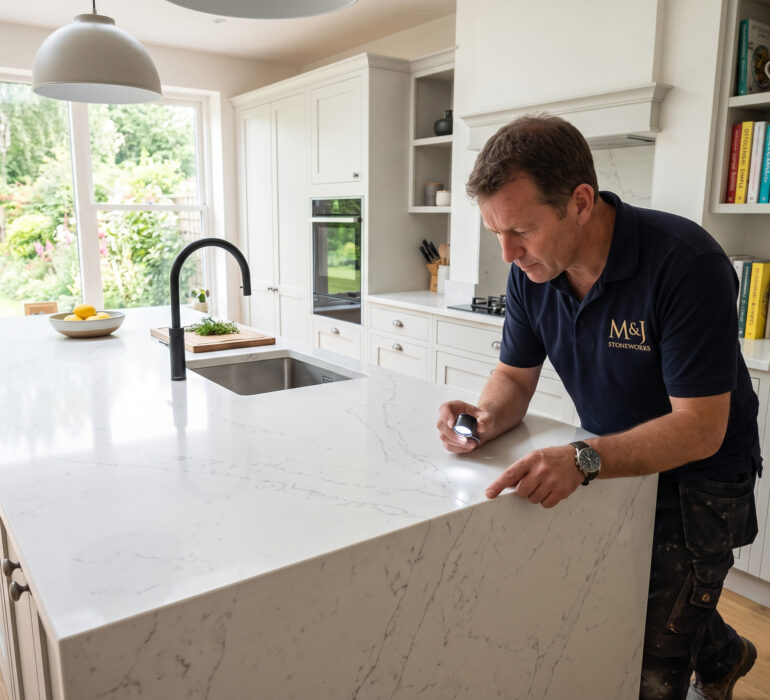
Our master stonemasons frequently see these structural failures occurring near weak points, such as sink cutouts and joint seams. Ensuring your kitchen cabinets are perfectly level during installation is crucial, as any structural unlevelness amplifies the risk of thermal cracking under stress.
How Fabrication Precision Prevents Thermal Cracking
Digital templating allows us to plan your layout to strict millimetre tolerances, ensuring the weight of the stone is distributed evenly. A perfectly balanced installation eliminates hidden tension points, making your worktop far more resilient to physical and thermal stress.
Our state-of-the-art CNC machinery mills incredibly clean, rounded internal corners for undermount sinks and hob cutouts. Sharp, 90-degree internal cuts act as stress-concentrating areas, whereas rounded radii distribute tension safely to prevent future cracking.
You can learn more about how our advanced machinery ensures long-term structural integrity in our guide to kitchen worktop fabrication techniques. Choosing a certified fabricator guarantees your stone is processed correctly to prevent avoidable fractures.
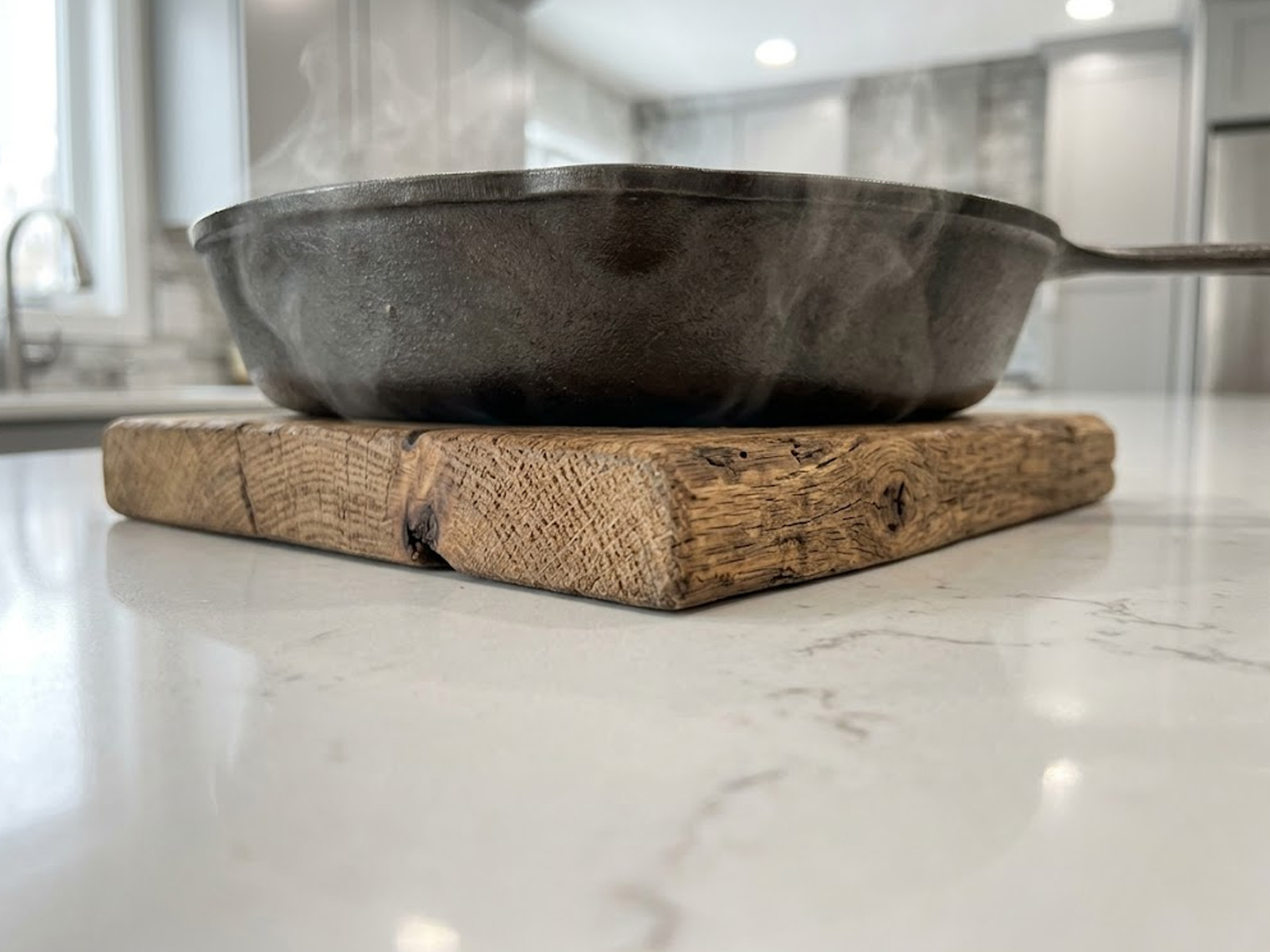
Practical Daily Tips to Prevent Heat Damage
Protecting your modern kitchen from accidental scorch marks requires establishing simple, daily habits that keep hot cookware off the stone. Investing in a set of high-quality wooden, silicone, or cast-iron trivets is the easiest way to safeguard your beautiful workspace.
You should also consider installing integrated stainless steel hot rods directly into the stone slab during the initial fabrication phase. These sleek, flush-fitting metal rails provide a dedicated, highly heat-resistant zone right next to your cooking hob.
We always advise customers to treat their worktops with the same care they would show to premium wood or high-pressure laminate. Taking these basic precautions ensures your kitchen surfaces retain their immaculate, showroom-quality finish for decades.
Choosing the Right Material for Your Kitchen Lifestyle
Selecting a kitchen surface should align perfectly with how you cook, prepare meals, and maintain your home daily. If you frequently handle heavy, piping-hot cast-iron skillets without thinking, engineered stone may require more conscious care than you prefer.
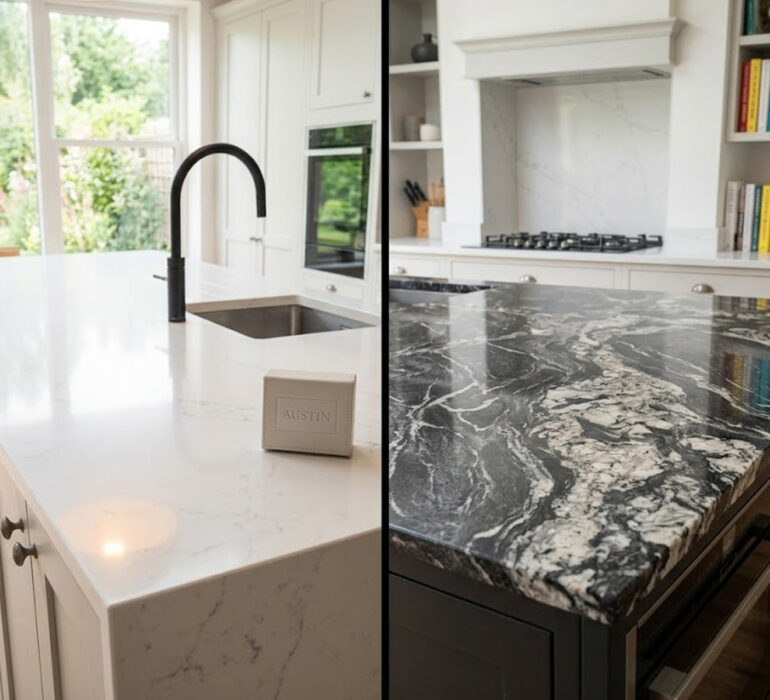
Homeowners who want an absolutely bulletproof material regarding thermal resistance often decide to opt for natural granite instead. However, this natural stone brings its own set of maintenance challenges, such as the strict requirement for annual chemical sealing.
To explore all the detailed pros and cons of engineered stone, review our comprehensive analysis of The Honest Pros and Cons of Quartz Kitchen Worktops. Weighing these practical factors helps you select the absolute best material for your specific cooking habits.
Comparing Heat Resistance Across Premium Materials
When evaluating are quartz worktops heat resistant, benchmarking the composite material against other popular worktop choices is highly beneficial. Every material possesses unique thermal thresholds and physical properties that dictate how they behave under extreme kitchen conditions.
Our fabrication facility processes various premium stones, allowing us to maintain strict quality control and offer objective material comparisons. The table below outlines the general heat tolerances and sealing requirements for the three most common kitchen worktop options.
| Worktop Material | Max Heat Tolerance | Susceptibility to Thermal Shock | Sealing Requirement |
| Engineered Quartz | Moderate (Up to 150°C) | Moderate (Resins can crack) | Never Required |
| Natural Granite | Exceptionally High (Over 250°C) | Low (Highly stable) | Annually |
| Laminate | Low (Up to 90°C) | Low (Will melt/delaminate) | Never Required |
The Relationship Between Colour and Heat Vulnerability
The specific pigment mixtures used to create different stone designs can play a surprising role in how heat damage presents visually. Darker slabs often hide minor surface marks well, but they can show dull, cloudy patches quite clearly if the resin scorched.
Conversely, light-coloured or marble-effect slabs will immediately show yellow or brown discolouration from hot cookware. When browsing for the most Quartz worktops colour options, you must keep these thermal maintenance realities in mind.
We always recommend choosing high-quality, certified slabs from reputable brands to ensure the highest ratio of natural quartz to resin. To see the most popular aesthetics currently trending in the UK, read our guide on the top popular quartz worktop colours uk.
How to Safely Clean Light Surface Residues
Occasionally, what appears to be a permanent scorch mark is actually just burnt food residue or metal transfer from the bottom of a pan. If a hot pot has left a dark streak, you must proceed with extreme caution to avoid scratching the polished factory finish.
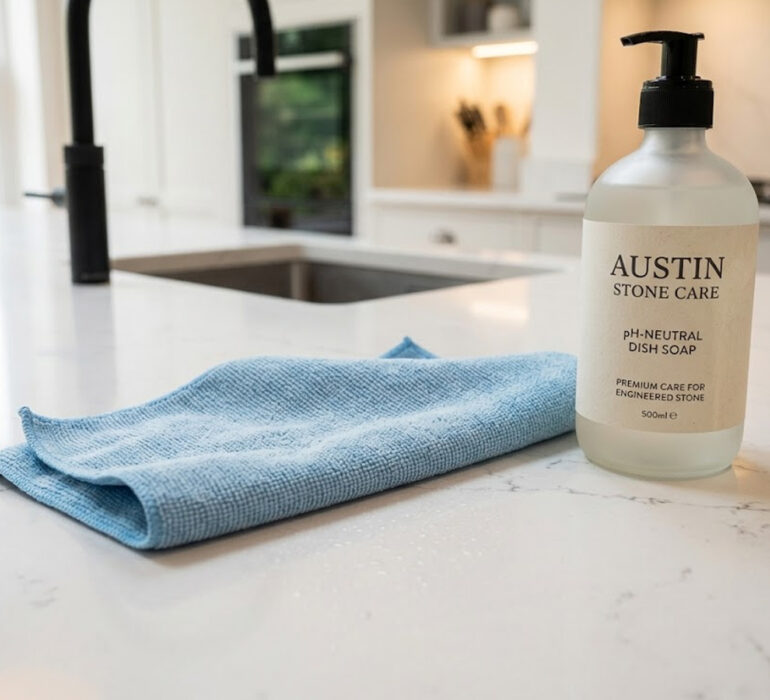
Never use highly abrasive scouring pads, steel wool, or harsh acidic descaling chemicals to lift these stubborn surface marks. Instead, apply a mild, pH-neutral stone cleaner with a soft microfibre cloth to gently lift the residue without harming the resin.
For a step-by-step breakdown of safe, stonemason-approved cleaning techniques, consult our detailed guide on how to clean quartz worktops. Using the correct maintenance methods preserves the brilliant sheen of your worktop for years.
Fabrication Safety Standards and UK Regulations
Fabricating dense engineered stone to match your bespoke kitchen layout requires cutting, profiling, and polishing the slabs in a highly controlled environment. The raw manufacturing process generates hazardous crystalline silica dust, which must be managed strictly to protect workshop staff.
Our modern, state-of-the-art facility operates in absolute compliance with the workplace safety guidelines established by the gov.uk Health and Safety Executive. We utilise advanced wet-cutting CNC machinery to suppress dust, ensuring a clean, safe, and professional environment.
This strict adherence to safety standards guarantees our skilled stonemasons work under optimal conditions while delivering flawless stone to your home. It also ensures that the final polished surfaces arriving at your property are completely free from microscopic chemical residues.
Securing the Best Worktop Deals with Austin
Partnering with a dedicated, direct-to-consumer fabricator is the absolute best way to secure premium stone surfaces at a highly competitive price. Because we manage every single step from digital templating to final installation, we completely eliminate expensive middleman retail markups.
You can explore our extensive expertise and browse our full range of bespoke kitchen surfaces by visiting Austin Laminate Countertops directly. Our direct-to-consumer business model guarantees you receive exceptional engineering quality, millimetre-precise installation, and transparent, honest pricing.
Before making your final material decision, it is highly recommended to compare all your options thoroughly. Read our expert comparison on quartz vs granite worktops to understand which stone suits your daily cooking requirements.
Request Your Professional Templating Quote Today
Stop relying on vague showroom estimates and secure an accurate, comprehensive quotation tailored precisely to your specific kitchen layout. Our in-house team is ready to assist you with material selection, edge profiling, and scheduling your professional digital templating visit.
Submit your kitchen plans or dimensions today to receive an accurate, transparent pricing breakdown by requesting a Free Quote through our secure online portal. Let our master stonemasons elevate your home with guaranteed engineering precision and highly competitive direct pricing.