
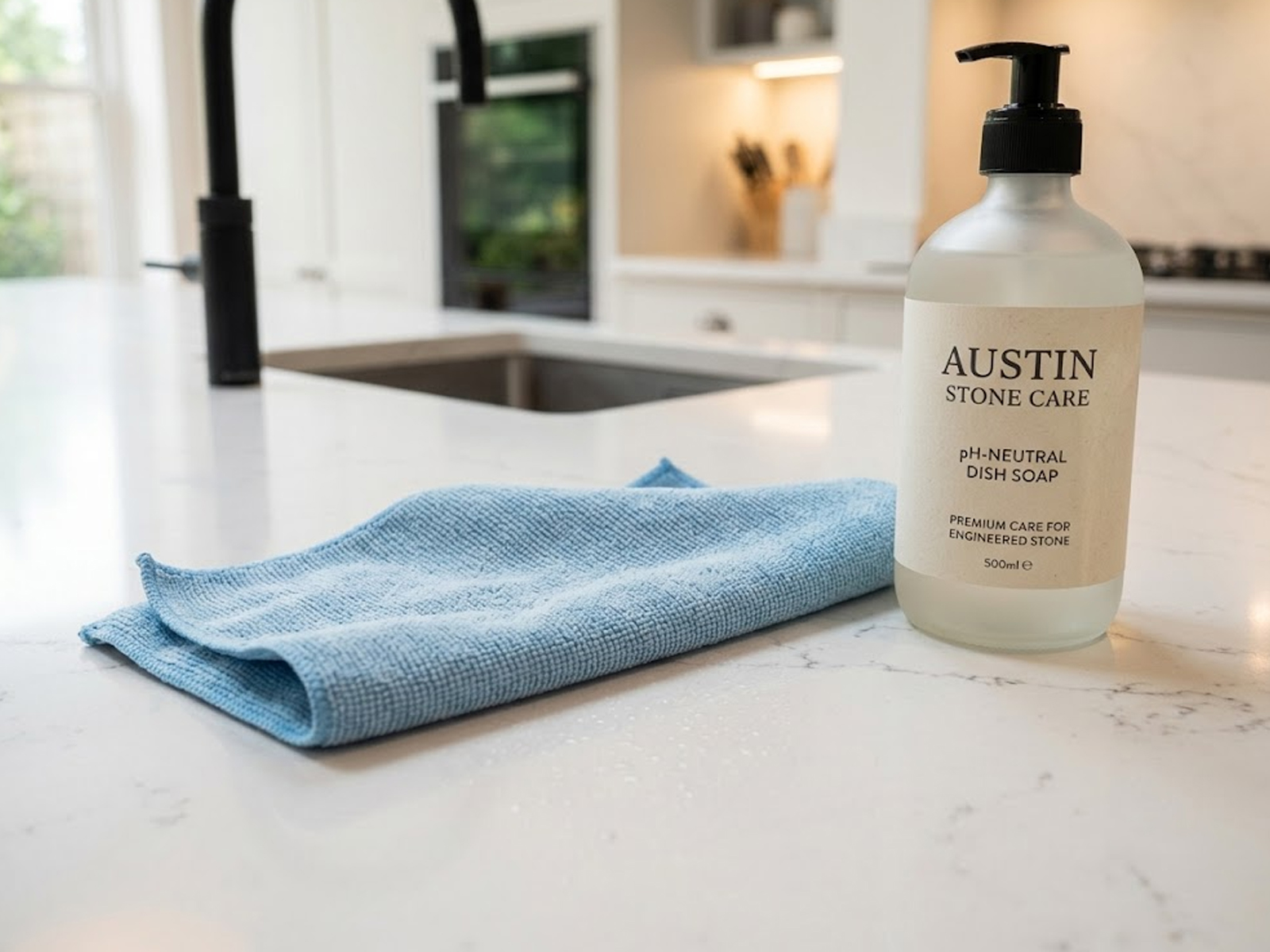
When determining how to clean quartz worktops, you must strictly prioritise gentle, non-abrasive methods to protect the internal resin binders.
Daily Wiping: Always use a soft microfibre cloth combined with warm water and a pH-neutral dish soap.
Stubborn Stains: Apply a specialist non-abrasive quartz cleaner, allowing it to dwell briefly before gently wiping the residue away.
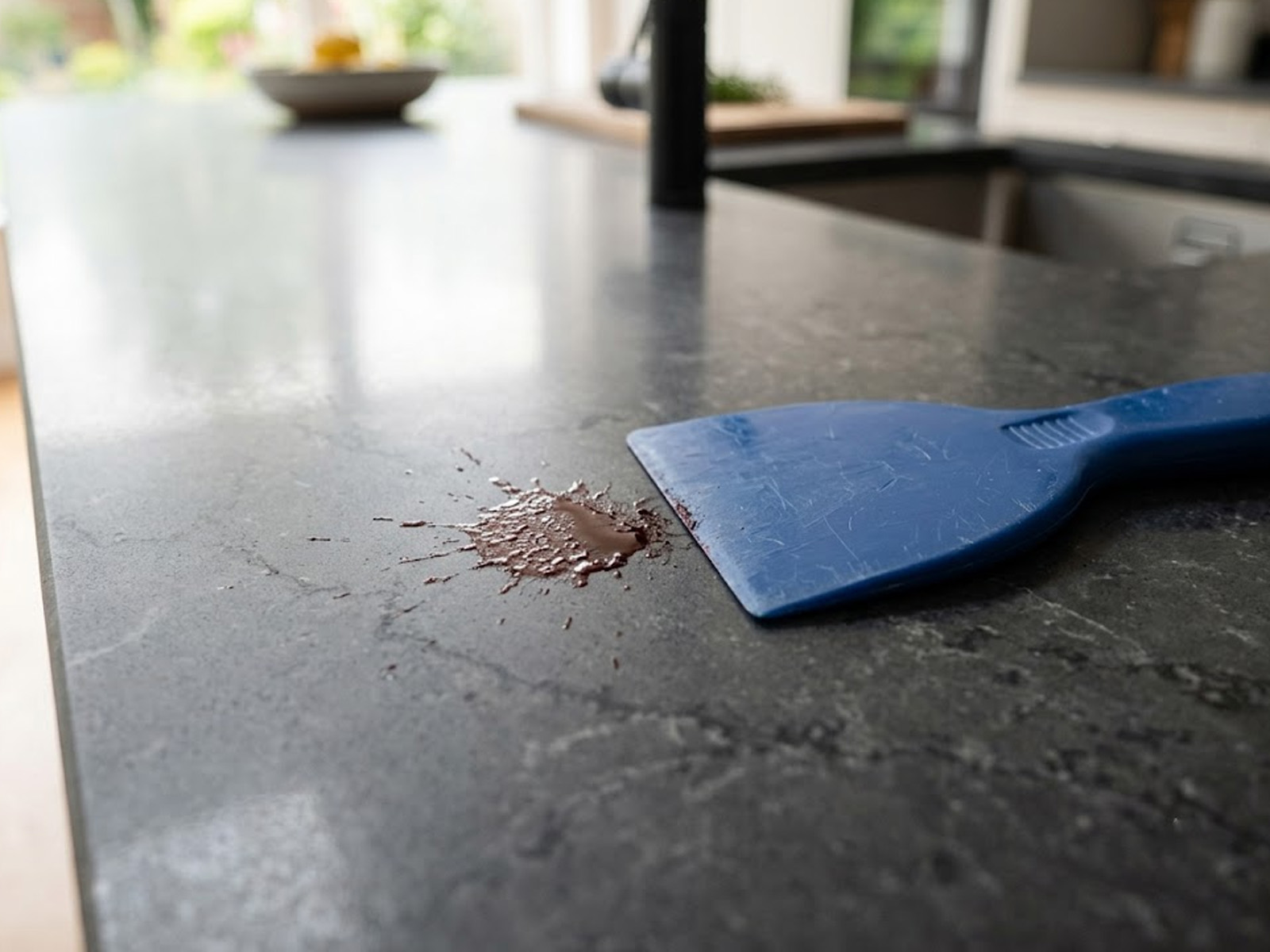
Dried Debris: Utilise a flexible plastic putty knife to carefully scrape off hardened food without scratching the engineered surface.
Strict Prohibitions: Never use household bleach, acidic descalers, or abrasive scouring pads, as these will permanently ruin the factory polish.
The Daily Routine: How to Clean Quartz Worktops Effectively
Understanding exactly how to clean quartz worktops on a daily basis ensures your bespoke kitchen surfaces retain their showroom gloss for decades. As experienced stonemasons, we constantly advise our clients that simple, consistent maintenance easily outperforms aggressive, reactive cleaning methods.
You should aim to wipe down your surfaces immediately after food preparation using a high-quality microfibre cloth and a mild detergent solution. This basic daily habit prevents sticky residues from hardening overnight, completely eliminating the need for intensive scrubbing the following morning.
Why Harsh Chemicals Ruin Engineered Stone
We regularly inspect failing installations where homeowners have mistakenly used aggressive supermarket multi-surface sprays on their engineered stone. These harsh, highly acidic chemicals slowly degrade the protective polymer resins binding the crushed quartz minerals together.
Once this resin degradation occurs, it leaves behind a dull, cloudy appearance that absolutely cannot be polished out or repaired on-site. When mastering how to clean quartz worktops, avoiding bleach, ammonia, and oven cleaners is the single most critical rule to follow.
Tackling Stubborn Spills: How to Clean Quartz Worktops Safely
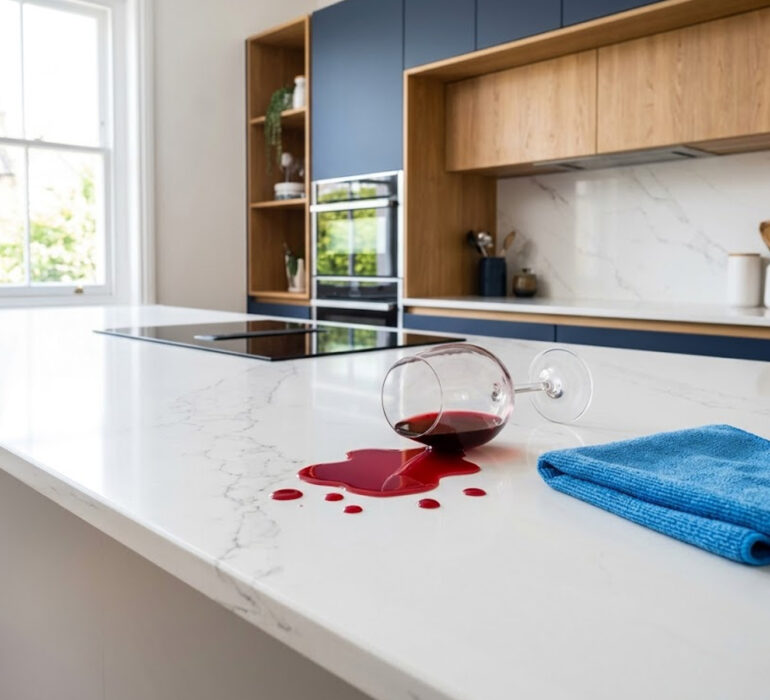
Learning how to clean quartz worktops effectively means knowing exactly how to handle dried-on grease, wine spills, and hardened culinary debris. Because engineered stone is entirely non-porous, liquids cannot penetrate the core, meaning surface stains are relatively simple to lift safely.
For stubborn, dried-on spills, spray a generous amount of specialist pH-neutral quartz cleaner onto the affected area and leave it for five minutes. This dwell time safely breaks down the molecular bonds of the grease, allowing you to wipe it away cleanly without applying heavy pressure.
Common Customer Mistakes When Removing Hardened Debris
A frequent and disastrous mistake we see on-site is clients using metal blades or abrasive scouring pads to scrape away hardened food. While quartz is exceptionally scratch-resistant, the aggressive friction from industrial scouring pads will permanently micro-scratch the polished resin surface.
Instead, you must gently ease off hardened debris using a flexible plastic putty knife, keeping the blade completely flat against the worktop. Once the bulk of the debris is carefully lifted, you can revert to your standard warm water and microfibre cleaning routine.
Preserving Your Investment and Quartz Worktops Colour
Maintaining your bespoke surface requires understanding how environmental factors interact with the engineered materials over a long period. Direct, prolonged exposure to intense UV light through unshaded windows can gradually fade the synthetic pigments mixed into the stone during manufacturing.
When selecting your ideal Quartz worktops colour, remember that darker shades often show hard watermarks more readily than lighter veined designs. You must dry the surface completely with a clean cloth immediately after washing to prevent these cloudy mineral deposits from forming.
Protecting Your Bespoke Surfaces from Thermal Shock
While proper cleaning routines protect the polish, extreme thermal shock poses the greatest structural threat to your engineered kitchen surfaces. Placing boiling pans directly onto the cold stone can cause the resin binders to instantly scorch, or worse, fracture the slab entirely.
For a comprehensive understanding of the material’s limitations, we strongly recommend reading our guide on The Honest Pros and Cons of Quartz Kitchen Worktops. Always use heavy-duty trivets or integrated stainless steel hot rods to keep intense heat safely away from the engineered stone.
Professional Fabrication and Easy Maintenance
The true secret to easily managing how to clean quartz worktops starts long before the stone is ever fitted into your property. Millimetre-precise digital templating ensures that the joints connecting your bespoke slabs are incredibly tight, seamless, and perfectly levelled.
Poorly fabricated joints quickly become unhygienic traps for crumbs, moisture, and bacterial growth, making your daily cleaning routine incredibly frustrating. Our in-house CNC cutting technology guarantees flawless joint alignment, ensuring a completely flat, hygienic surface that is effortless to wipe down.
Safe Manufacturing Standards and UK Regulations
Our fabrication facility strictly adheres to the latest workplace safety protocols established by the gov.uk Health and Safety Executive regarding silica dust. Managing this hazardous dust properly requires advanced water-jet machinery and heavy industrial air filtration systems.
This rigorous commitment to health and safety ensures our stonemasons are protected while they meticulously craft your bespoke surfaces. It also guarantees that the final polished slabs arriving at your home are completely uncontaminated and structurally flawless.
Comparing Maintenance: Quartz vs Natural Granite
To fully appreciate how to clean quartz worktops, it is highly beneficial to benchmark the routine against traditional natural granite installations. The table below outlines the distinct maintenance requirements and fabrication characteristics of these two premium kitchen materials.
| Maintenance Factor | Engineered Quartz | Natural Granite |
| Porosity | 100% Non-Porous | Naturally Porous |
| Sealing Required | Never | Annually (Chemical Sealant) |
| Daily Cleaning | pH-neutral soap & water | Specialist stone soap |
| Stain Vulnerability | Very Low (Resists wine/acids) | High (Requires immediate wiping) |
Securing Premium Bespoke Installations with Austin
Partnering with a dedicated fabrication specialist guarantees you receive a flawless installation that is incredibly easy to maintain long-term. By managing the entire process internally, we completely bypass expensive retail showrooms and eliminate costly middleman markups.
You can explore our extensive expertise and track record of precision engineering directly by visiting Austin Laminate Countertops. Our direct-to-consumer model ensures you receive breathtaking bespoke surfaces crafted to strict tolerances at a highly competitive price point.
Get Your Accurate Fabrication Quote Today
Stop relying on estimates and secure a transparent, highly accurate quotation tailored to your exact kitchen dimensions and design requirements. Our expert team will provide a detailed breakdown covering professional digital templating, in-house fabrication, and seamless final fitting.
Submit your kitchen plans today by requesting a Free Quote through our secure portal. Let our master stonemasons deliver a pristine, low-maintenance kitchen surface that will withstand decades of heavy daily use.
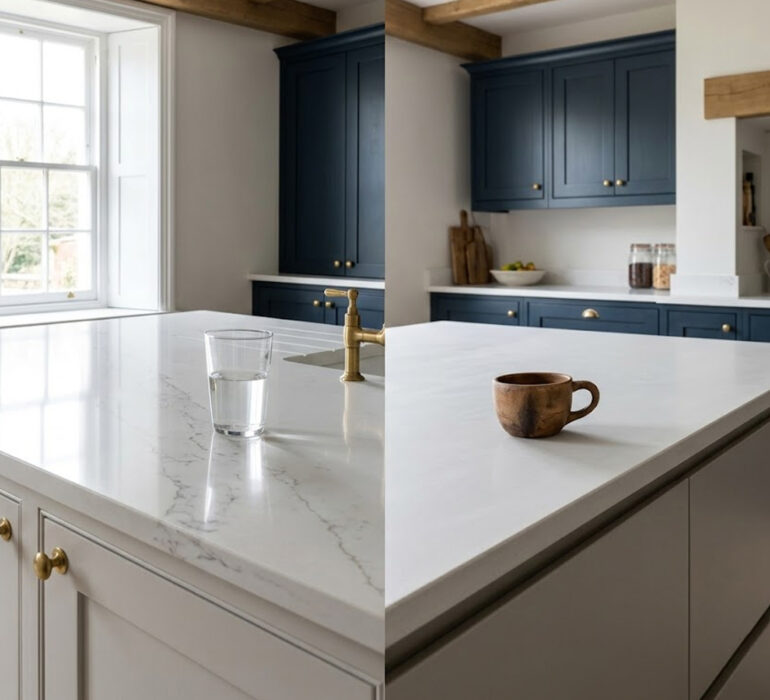
[…] safe, stonemason-approved cleaning tips, check out our guide on how to clean quartz worktops. Using the correct cleaning methods preserves the beautiful sheen of your worktops for […]
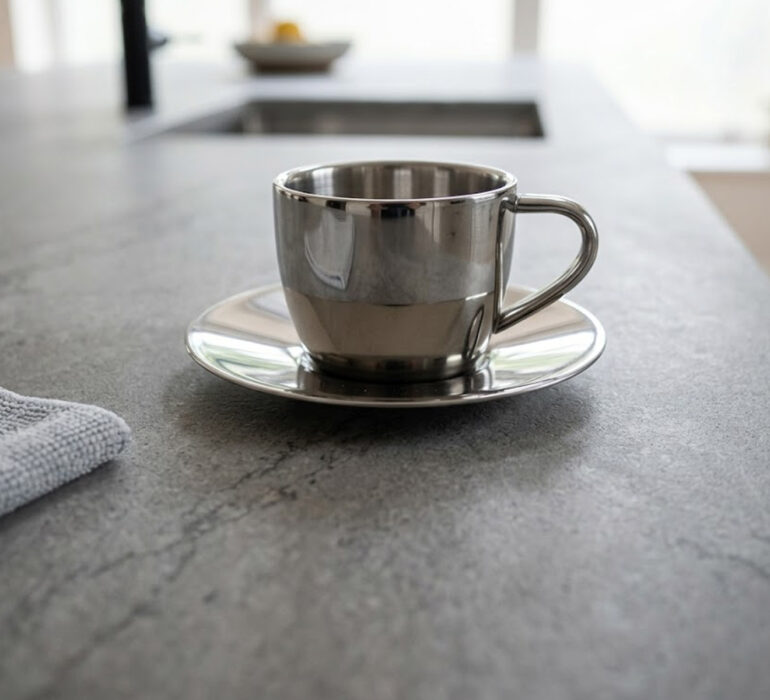
[…] exactly how to care for these different textures safely, consult our dedicated article on how to clean quartz worktops. Using the correct, non-abrasive cleaning methods guarantees your chosen finish will last a […]