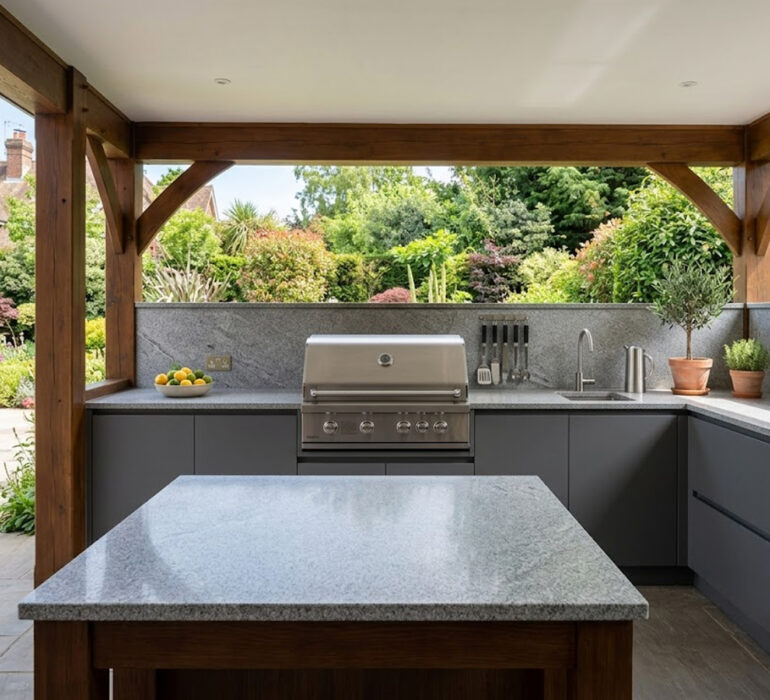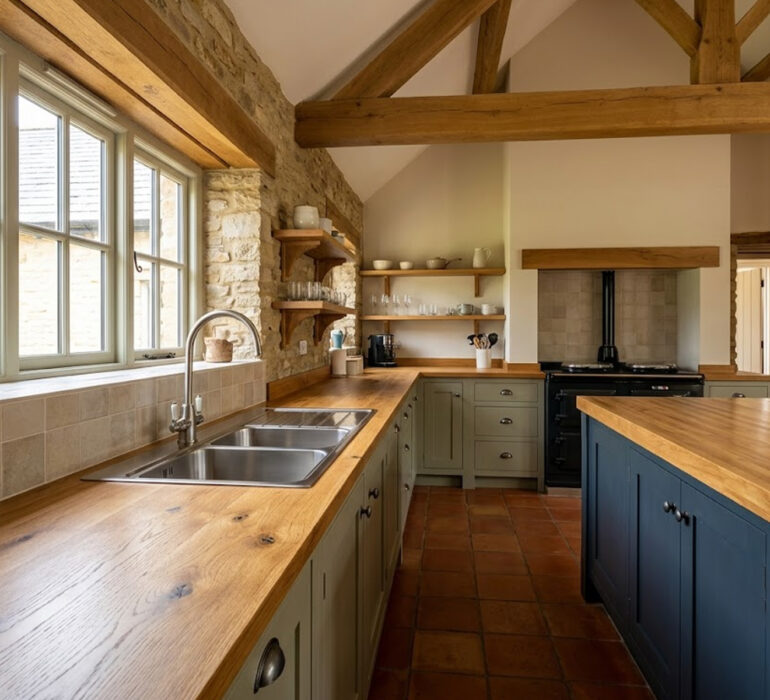
Definitive Verdict: Pros and cons of granite worktops highlight that while they offer unparalleled heat resistance and unique natural aesthetics, they require diligent sealing to prevent staining and are susceptible to cracking under extreme structural tension.
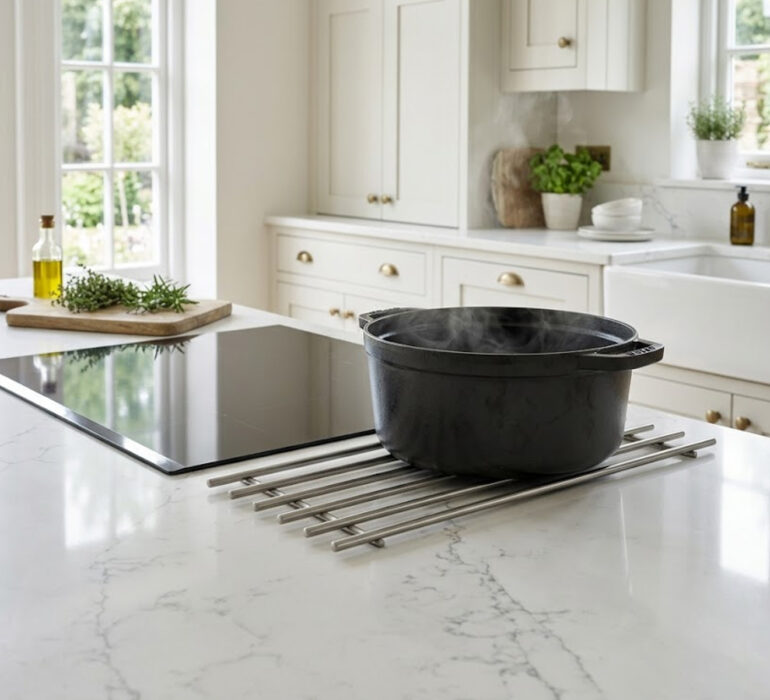
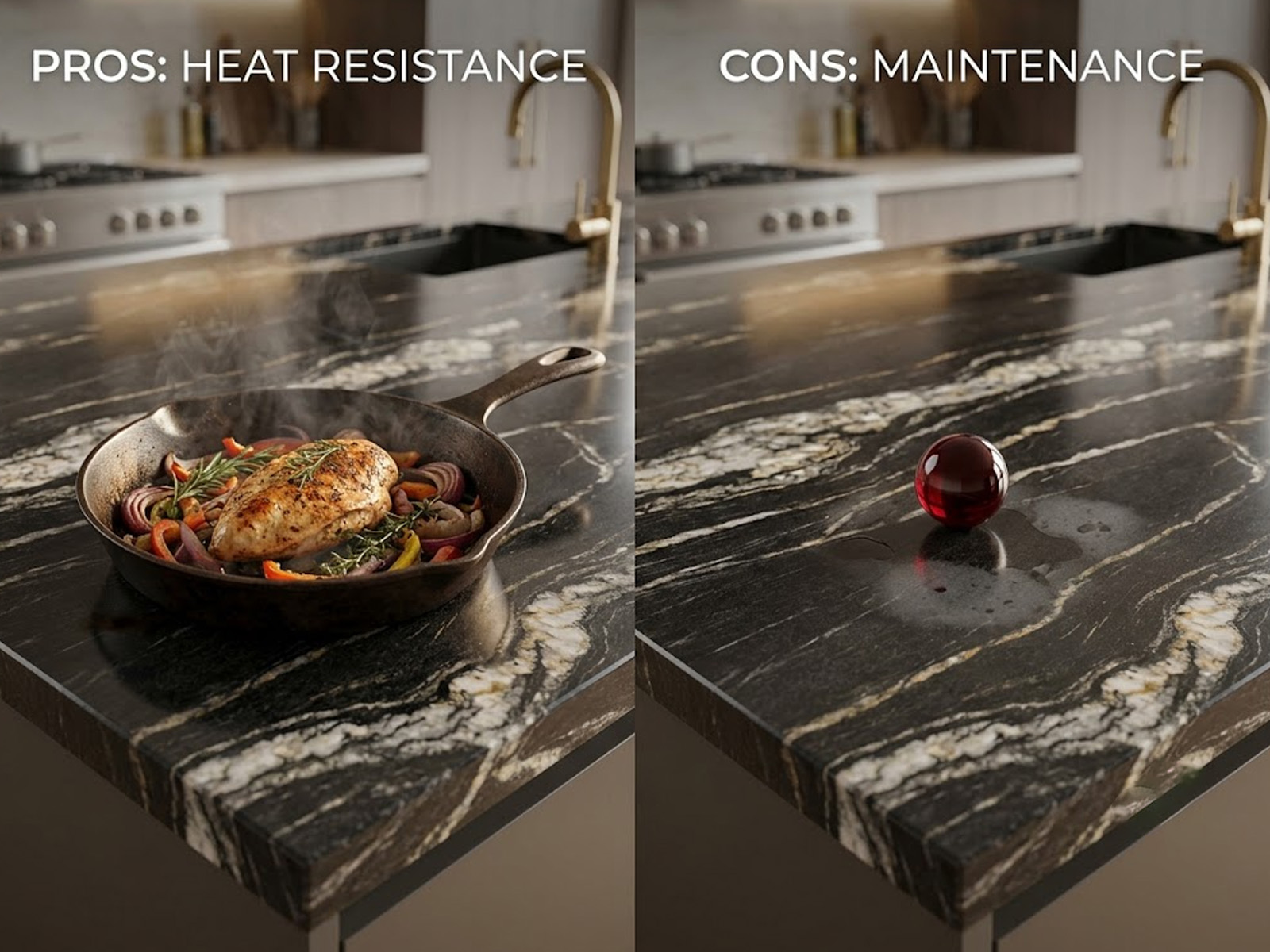
Heat & Durability: Granite is arguably the most heat-resistant natural surface, easily withstanding high-temperature pans that would instantly ruin composite materials.
Maintenance Requirement: Unlike zero-maintenance surfaces, natural stone must be professionally sealed annually to maintain its non-porous integrity against acidic kitchen spills.
Professional Verdict: Granite remains the premium choice for homeowners prioritising bespoke geological character over the uniform consistency of engineered quartz or laminate.
Evaluating the Pros and Cons Granite Worktops in the Landscape
As experienced fabricators, we routinely manage the entire lifecycle of pros and cons granite worktop projects, from sourcing raw slabs at the quarry to the final installation. Natural stone is a unique geological product; every single slab features distinct mineral veins, crystalline structures, and tonal variations that no manufacturing process can perfectly replicate.
However, the inherent porosity of stone is a technical factor you must accept before committing to the investment. Evaluating the pros and cons of granite worktops reveals that while your kitchen will look completely bespoke, it will demand a more rigorous cleaning regime than synthetic alternatives.
Unrivalled Thermal Resistance and Hardness
The most significant advantage when weighing the pros and cons of granite worktops is the material’s immense heat resistance. You can confidently move a heavy, boiling roasting tin directly from your oven onto the stone surface without risking any blistering, melting, or thermal discolouration.
This physical hardness also makes the surface incredibly difficult to scratch with standard kitchen knives or heavy cookware. When we fabricate natural granite worktops, we utilise diamond-tipped CNC tooling because the material’s Mohs hardness is so significantly high that standard steel tools are entirely ineffective.
Understanding the Necessity of Annual Sealing
A major disadvantage in the pros and cons granite worktop discussion is the requirement for regular maintenance to ensure the material remains food-safe. Because the stone is naturally porous, it acts like a filter, slowly absorbing cooking grease, red wine, or citrus juices if the protective sealant degrades.
We provide a comprehensive handover after installation, demonstrating the professional-grade impregnating sealers required to maintain the stone’s non-porous barrier. Failing to re-apply this sealer annually will lead to permanent, unsightly staining that often requires professional grinding and repolishing to remove.
Addressing Structural Installation Risks and Failures
A critical technical error we see during installations involves property owners presenting unlevel base units for stone placement. Granite is a rigid, unforgiving material; if your cabinet framework is not perfectly level, the granite slab will eventually develop stress fractures along the weakest points.
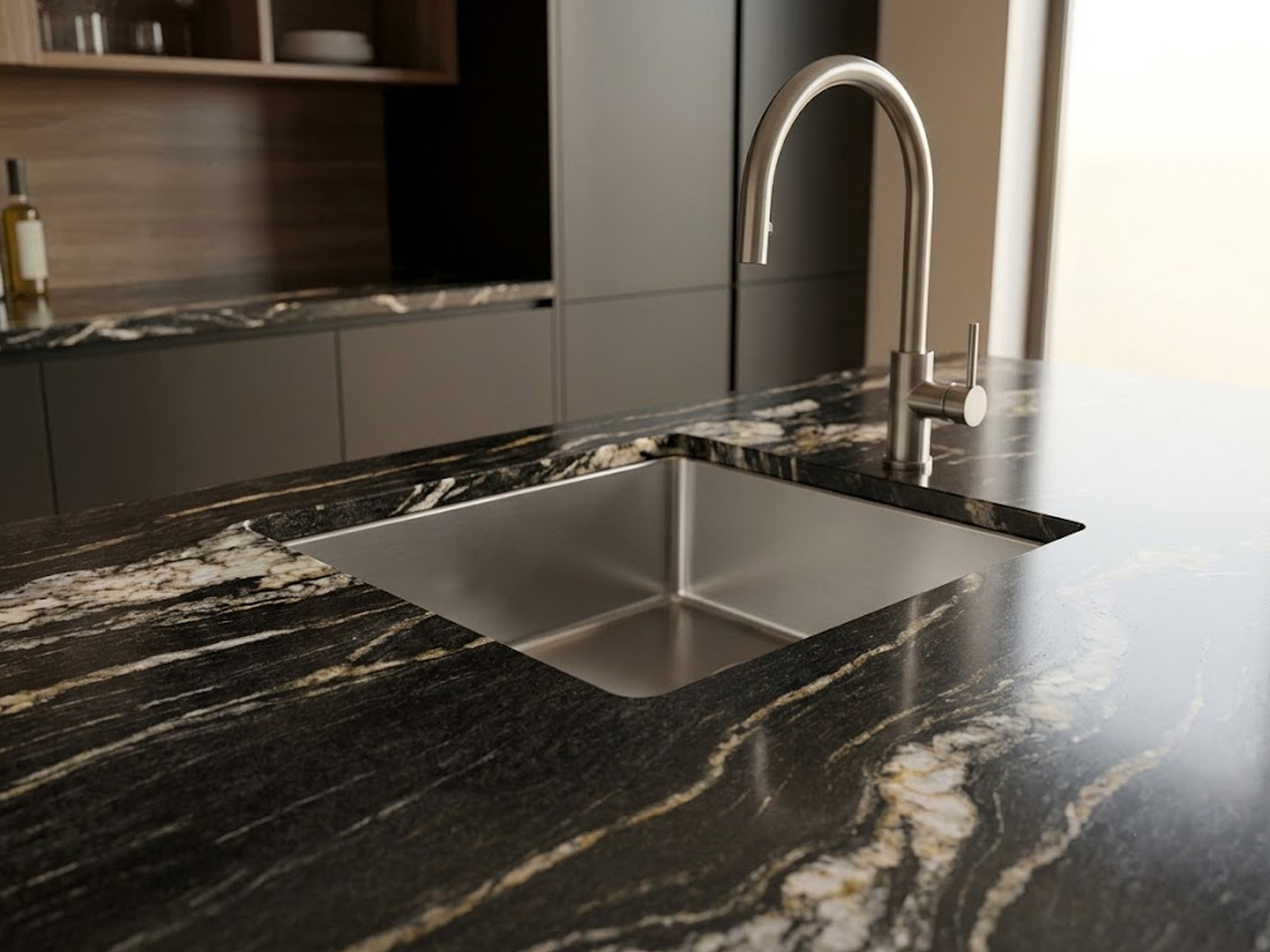
Furthermore, we must meticulously plan the location of all sink and hob cutouts during our digital templating phase to ensure adequate stone remains around these apertures. Too little material around a sink cutout significantly weakens the structural integrity, risking a catastrophic crack during daily use.
Compliance with Health and Safety Regulations
Fabricating these dense natural surfaces generates immense volumes of fine crystalline silica dust, which presents a severe respiratory risk to our workshop team. We operate under stringent gov.uk Health and Safety Executive regulations, utilising advanced industrial extraction to capture all particulates at the CNC cutting source.
Our ethical commitment to worker safety ensures that your stone surfaces are produced in a highly controlled, safe environment. We prioritise these rigorous standards to guarantee our tradesmen work safely while crafting your bespoke kitchen installation.
Comparing Granite, Laminate, and Quartz Surfaces
To help you allocate your renovation budget effectively, we have compiled a structural comparison of the most popular kitchen worktop materials. Understanding the differences ensures you select a surface that genuinely matches your household’s daily culinary requirements.
| Surface Material | Heat Resistance | Maintenance Needed | Structural Consistency |
| Natural Granite | Exceptional | Annual sealing | Natural variation |
| Engineered Quartz | Moderate | Very low | Perfectly uniform |
| Premium Laminate | Low | None | Highly durable |
Managing Costs Through Direct Fabrication
When analysing the pros and cons granite worktops provide, the initial cost is often higher than synthetic options due to raw material importation and intensive milling. By partnering with Austin Laminate, you eliminate the expensive high-street retail markups that often make these projects seem unattainable.
We manage the entire fabrication and installation process in-house, ensuring absolute control over the quality of your bespoke stone kitchen. Our streamlined, direct-to-consumer approach guarantees you pay for premium geological character and expert British stonemasonry rather than unnecessary showroom overheads.
Book Your Precision Templating and Installation
Stop settling for generic surfaces and let our master stonemasons bring the unique, dramatic character of natural stone into your home. Our dedicated team is ready to guide you through slab selection, edge profiling, and matching upstands for your bespoke project.
Submit your kitchen plans today to receive a transparent, highly accurate price tailored to your specific architectural requirements. Secure your peace of mind by requesting an Instant free quote through our secure online portal and lock in your price today.