Yes, chipped quartz worktops can be repaired nearly seamlessly using professional clear or colour-matched acrylic and epoxy resins. While a completely invisible restoration is highly dependent on the stone’s pattern, a skilled stonemason can make most structural chips virtually unnoticeable to the naked eye.
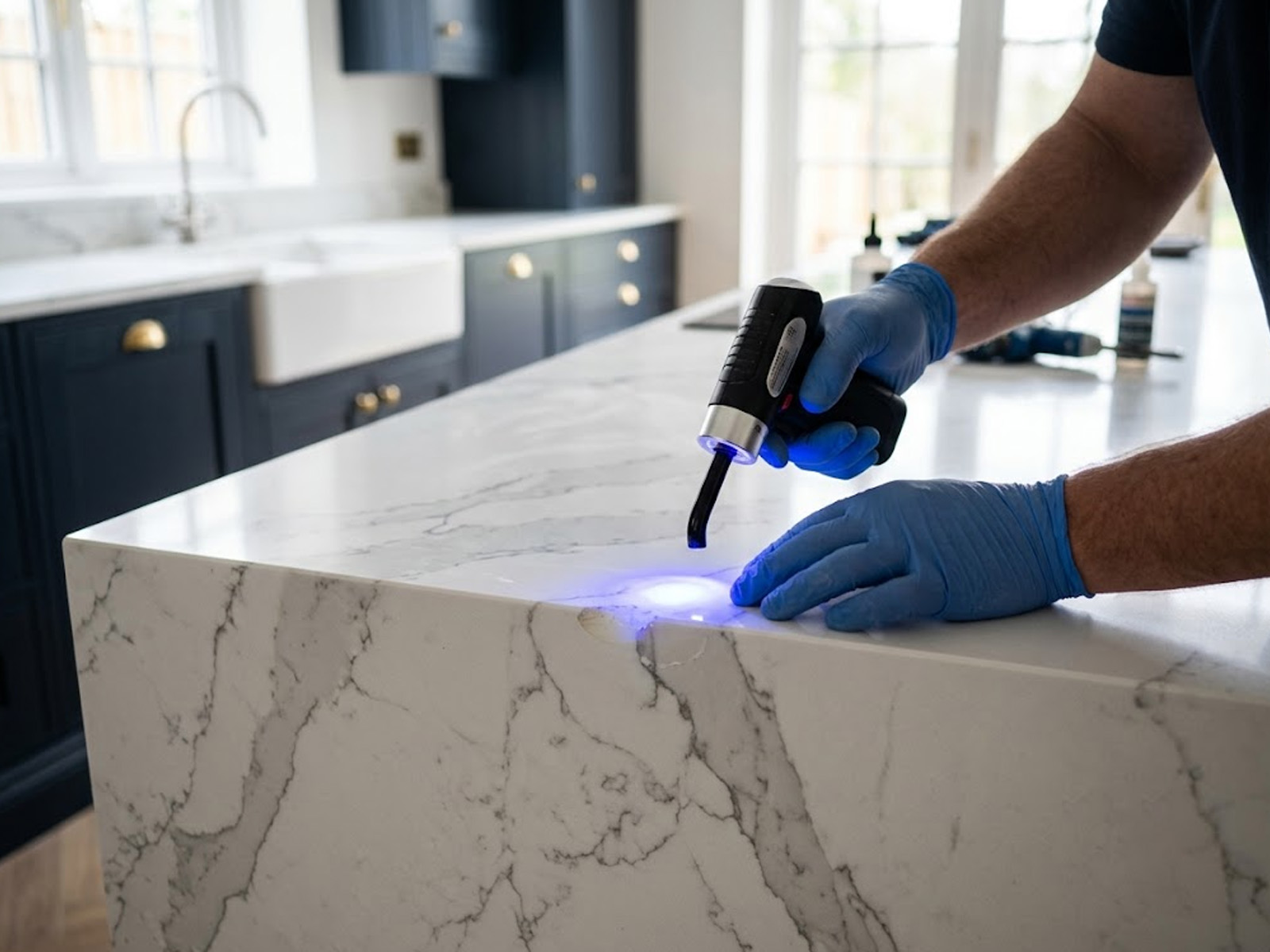
Repair Method: Professional fabricators use clear cyanoacrylate (super glue) or pigment-tinted epoxy resins, cured rapidly using specialised UV light guns.
Aesthetic Quality: Solid colours and fine-grained patterns yield the most seamless results. Highly complex, heavily veined Calacatta patterns are more challenging but can be successfully disguised.
Professional vs DIY: Small edge nicks can be treated with consumer DIY kits. However, deep, structural corner damage strictly demands a professional quartz worktop chip repair specialist.
The Reality Behind Quartz Worktop Chip Repair
Understanding the technical limits of quartz worktop chip repair is essential before assessing your damaged kitchen counter. As experienced stonemasons, we handle both minor nicks and major impact fractures, restoring surfaces to their structural glory.
While engineered stone is incredibly durable, it is not completely indestructible. Heavy cast-iron pots dropped directly onto vulnerable edges will cause chipping, requiring precision restoration to seal the non-porous structure.
Our team approaches every restoration project with strict attention to detail, carefully mixing liquid pigments to match the base slab’s background shade. This hands-on expertise ensures the cured resin mirrors the light-reflective qualities of your surrounding polished worktop.
Phase 1: How Professionals Repair Chipped Quartz Slabs
The professional quartz worktop chip repair process relies on chemical bonding agents designed to replicate the properties of the original resin binder. We clean the chipped pocket meticulously to remove grease, dirt, and kitchen residues before applying any adhesive.
Once the cavity is clean, we mix a premium two-part acrylic or epoxy resin with precise structural pigments. This colour-matched compound is carefully layered into the chip, slightly overfilling the void to account for shrinkage during the rapid curing process.
Curing and Leveling the Damaged Stone Surface
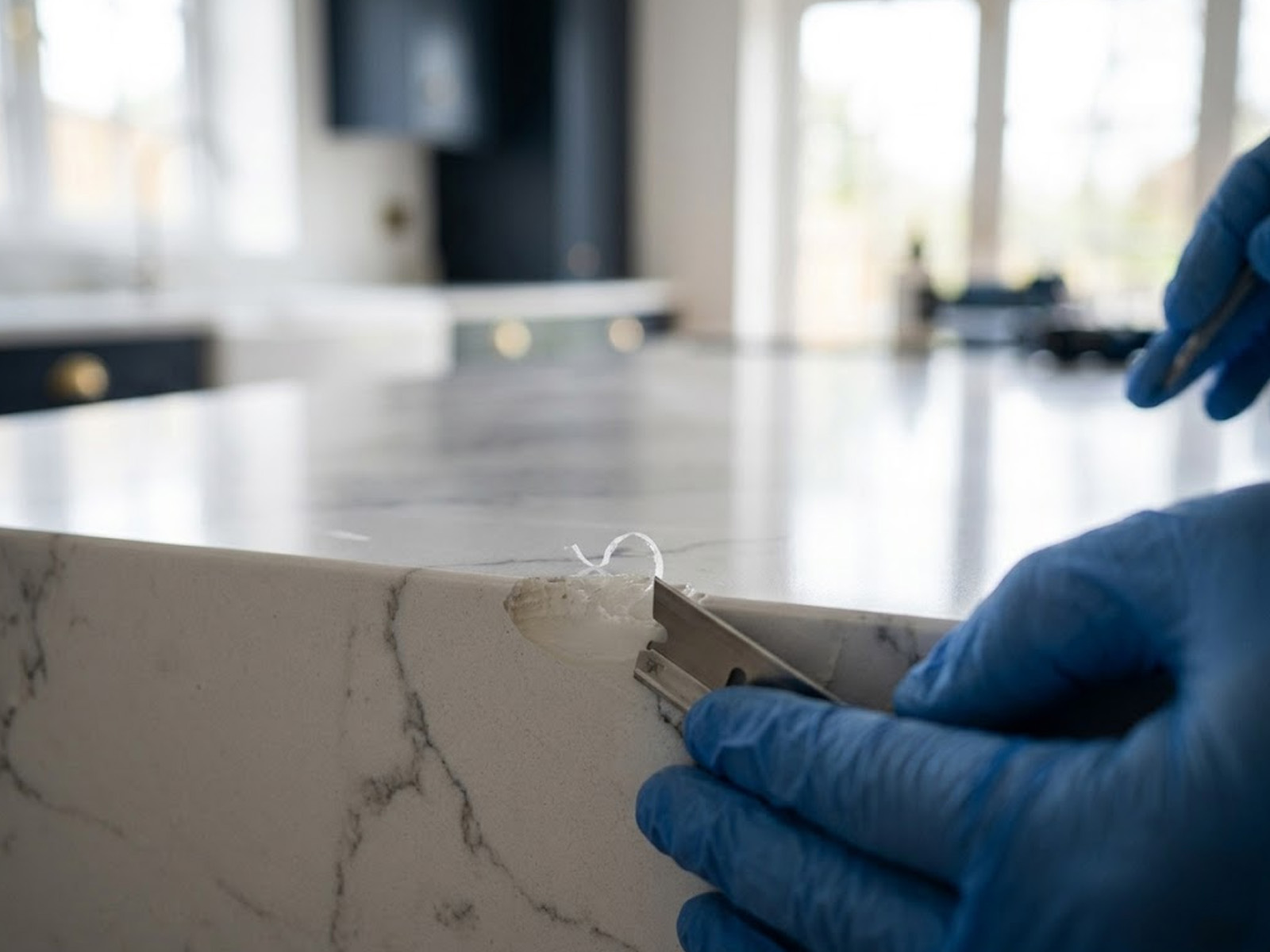
After filling the chip, we use a high-intensity UV curing gun to harden the resin compound within seconds. Once fully cured, we level the excess material using a highly flexible razor blade, keeping it completely flat against the worktop.
This delicate hand-scraping process requires immense skill to avoid scratching the surrounding polished stone. We finish by polishing the repaired spot with progressive micro-abrasive pads, restoring the seamless gloss of your Quartz worktops without leaving dull halos.
Phase 2: Common Mistakes That Cause Quartz Worktops to Chip
Homeowners frequently make the mistake of using heavy, unpadded cast-iron pans or metal pots near vulnerable sink cutouts. This high-impact activity is the leading cause of edge damage, particularly when transferring heavy cookware into undermount sinks.
Furthermore, failing to level base cabinetry during installation puts the rigid stone under permanent structural tension. This hidden physical stress makes the edges significantly more vulnerable to chipping or cracking from minor impacts.
Choosing the Wrong Edge Profile for Your Lifestyle
Selecting a sharp, 90-degree square edge profile for a high-traffic family kitchen is a common mistake we resolve daily. These crisp, sharp edges lack the protective curvature needed to deflect impacts, making them highly susceptible to damage.
We always advise choosing a bevelled, pencil, or bullnose edge profile during the digital templating phase of your project. These rounded profiles distribute the force of impact safely, drastically reducing the risk of needing a quartz worktop chip repair later.
You can learn more about choosing the best edge profiles in our detailed guide on 20mm vs 30mm Quartz Worktops: Making the Right Choice. Preparing your design correctly prevents expensive structural damage from occurring down the line.
Phase 3: Material Limitations and Repair Visibility
The final appearance of your quartz worktop chip repair is heavily dictated by the specific colour and pattern of your engineered stone. Solid grey, pure white, and fine-grained patterns are relatively straightforward to match seamlessly.
In contrast, matching large, sweeping veins or mirror-flecked designs is a highly complex task that demands professional intervention. The table below outlines how different patterns perform during the restoration process.
| Quartz Pattern Type | Repair Difficulty | Expected Visual Seamlessness |
| Solid White / Grey | Low | Highly Seamless (95-98% invisible) |
| Fine Grain / Sandy | Moderate | Very Good (90-95% invisible) |
| Mirror Fleck / Shimmer | High | Good (Requires reflective additives) |
| Bold Calacatta Vein | Exceptionally High | Moderate (Requires hand-drawn vein matching) |
Why Pattern Matching Requires Artistic Expertise
When restoring heavily veined stone, our stonemasons must act as artists, hand-drawing the veining through the cured resin layers. This multi-stage process involves embedding dark pigments within the clear acrylic to mimic the natural flow of the pattern.
It is this meticulous craftsmanship that separates a cheap DIY attempt from a professional, highly seamless restoration. If your worktop features intricate patterns, you should review our guide on the top popular quartz worktop colours uk to see how various designs behave.
Phase 4: Protecting Your Restored Quartz Worktops
Once your quartz worktop chip repair is complete, adopting safe daily maintenance habits will ensure the mend remains completely intact. The cured epoxy resins are highly durable but remain slightly more sensitive to extreme heat and harsh chemicals than the original stone.
You must avoid placing boiling hot pans directly over the repaired area, as intense heat can melt or discolour the adhesive. To understand how heat affects your surface, review our guide on Can You Put Hot Pans Directly on Quartz Worktops?.
Additionally, avoid scrubbing the repaired spot with abrasive scourers or acidic cleaning agents. Stick to warm water and a mild, pH-neutral dish soap applied with a soft microfibre cloth to clean the area safely.
Safe Cleaning Practices in the UK
Our restoration advice is designed to help you preserve the pristine, factory-polished finish of your worktop indefinitely. For a comprehensive, step-by-step cleaning checklist, consult our expert article on how to clean quartz worktops.
Furthermore, always ensure any household cleaners you purchase comply with safety regulations. We recommend verifying product safety data sheets via gov.uk to ensure they are free from toxic chemical solvents that could dissolve cured resins.
The Austin Direct Fabrication Advantage
Partnering with a direct-to-consumer fabricator ensures you receive premium-grade materials and expert support throughout the lifetime of your kitchen. By managing the entire process internally, we bypass traditional high-street retail showrooms entirely.
At Austin Laminte Countertops, our direct model means we handle digital templating, CNC cutting, and final installations ourselves. This allows us to maintain strict quality control while offering highly competitive pricing on all bespoke surfaces.
If you are currently debating between different stone options, we advise reading quartz vs granite worktops. Understanding how each material handles impacts helps you choose the perfect surface for your culinary lifestyle.