Deciding between 20 mm vs 30 mm quartz worktops is a crucial step in kitchen planning. We have handled countless professional installations, and our experience shows that neither thickness is objectively “better” for all situations. While both are highly durable, the right choice for your bespoke kitchen depends entirely on your desired aesthetic, your budget, and the structural capability of your cabinetry.
20mm Quartz: Offers a sleek, contemporary, and often preferred minimalistic appearance, suitable for modern designs. It is slightly cheaper and lighter, but may require additional structural support from your kitchen units, especially over large spans.
30mm Quartz: Provides a highly traditional, robust, and monolithic look that many property owners still prefer for classic kitchens. While slightly more expensive, it is structurally stiffer, potentially eliminating the need for extra cabinet reinforcement.
Navigating the Decision: Aesthetics of 20mm vs 30mm Quartz
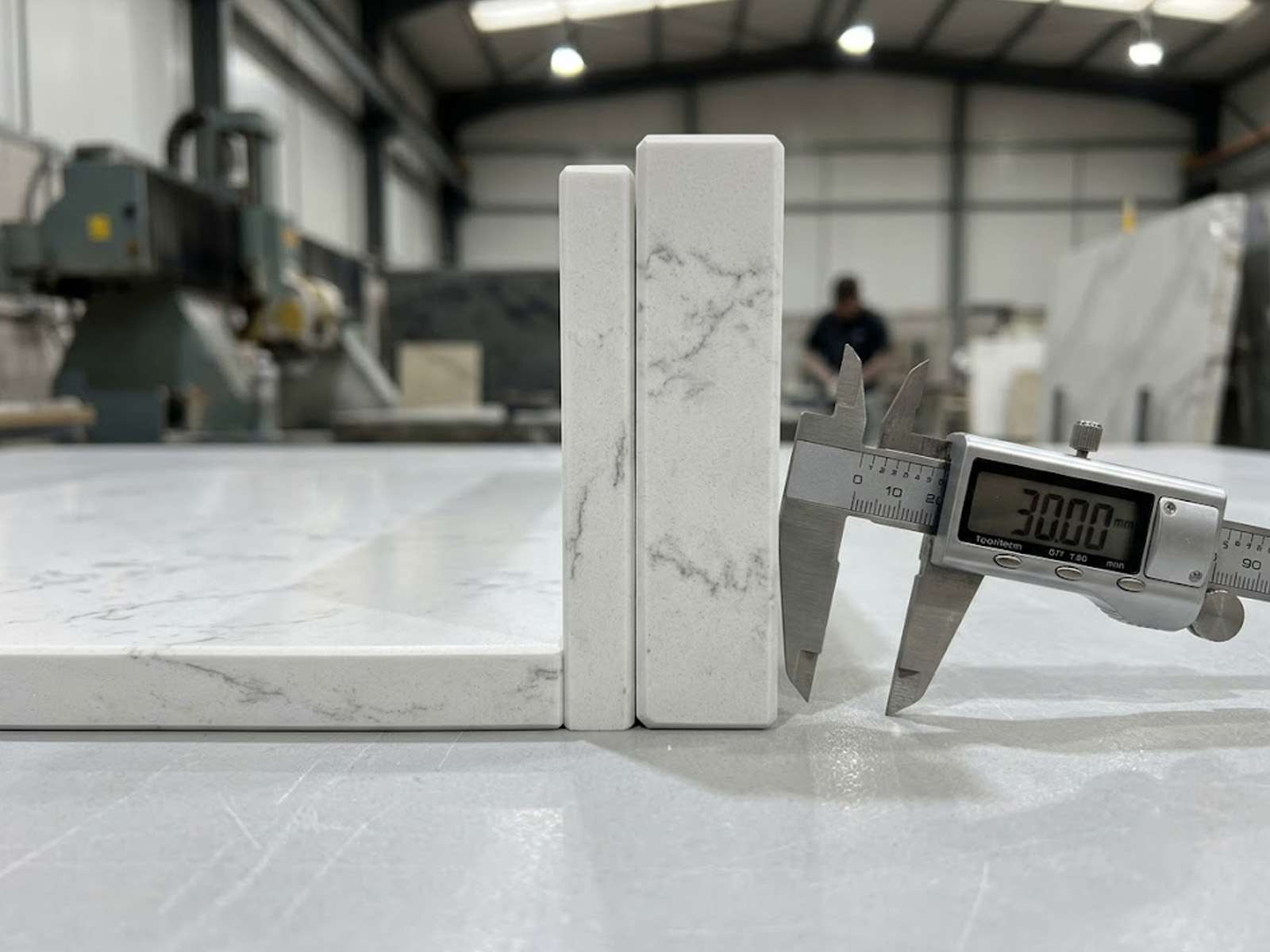
The primary differentiator when customers view our full-sized slabs is the visual profile each thickness creates. When comparing 20mm vs 30mm quartz, the thinner option is rapidly becoming the dominant choice for truly modern British kitchens.
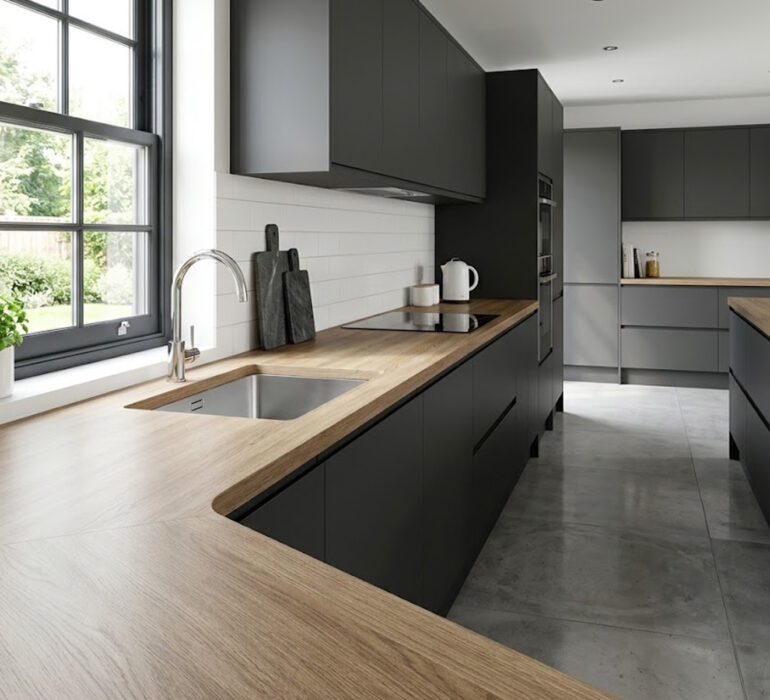
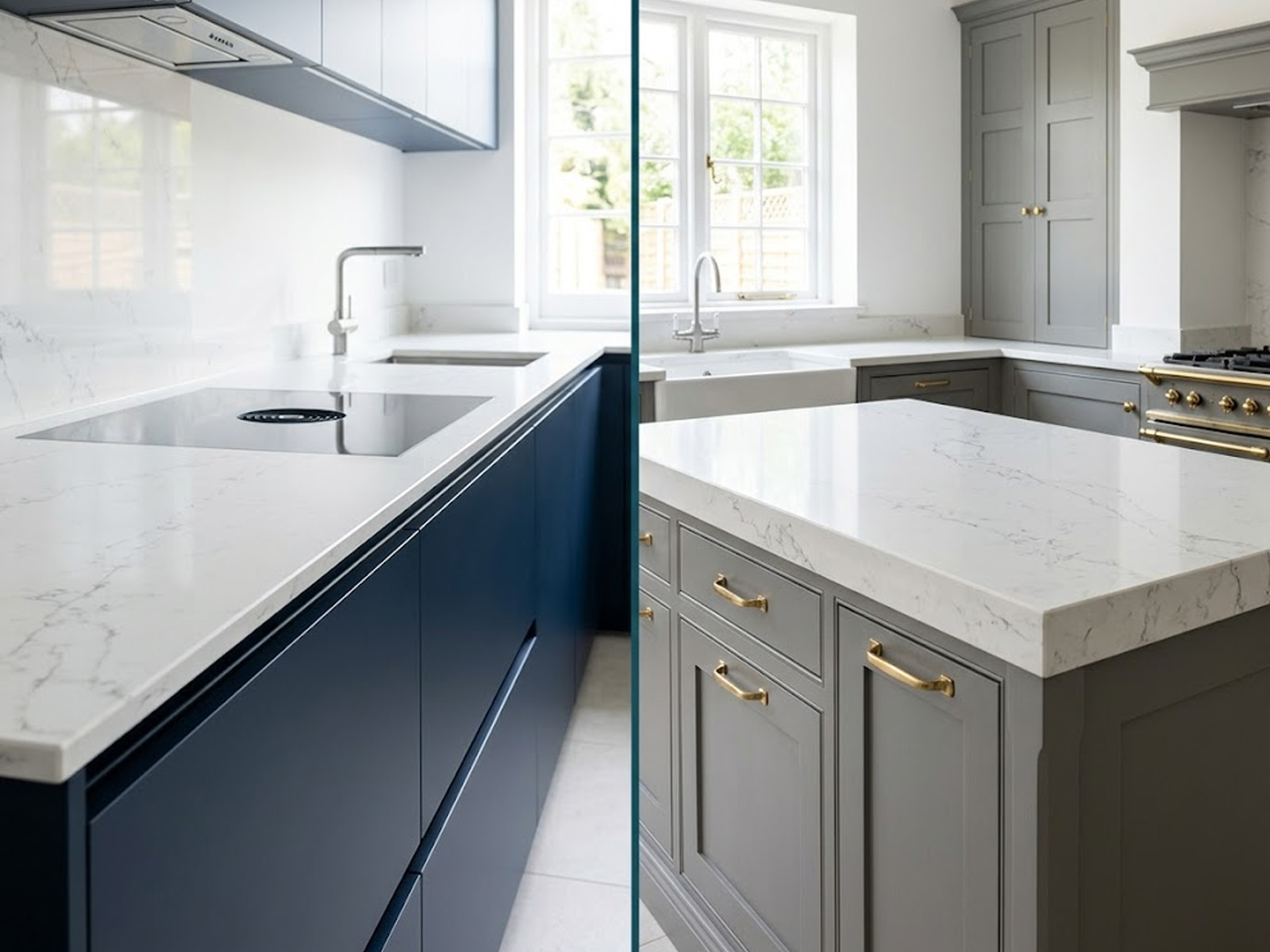
We find the 20mm profile offers a highly desirable, minimalistic aesthetic that pairs flawlessly with contemporary handleless cabinetry. It creates clean, unobtrusive lines that many property owners seek for a sophisticated, sleek finish in open-plan living areas.
In contrast, the 30mm vs 20mm quartz debate takes a more traditional turn when homeowners view our monolithic 30mm slabs. We often install this thickness in classic Shaker-style or country kitchens because it delivers a substantial, robust look that immediately conveys premium quality and traditional endurance.
Visual Impact and Design Trends
Modern European design strongly favours the thinner profile, and we are seeing a significant volume of bespoke orders specifically requesting the 20mm material. This aesthetic preference heavily influences how homeowners weigh 20mm vs 30mm quartz.
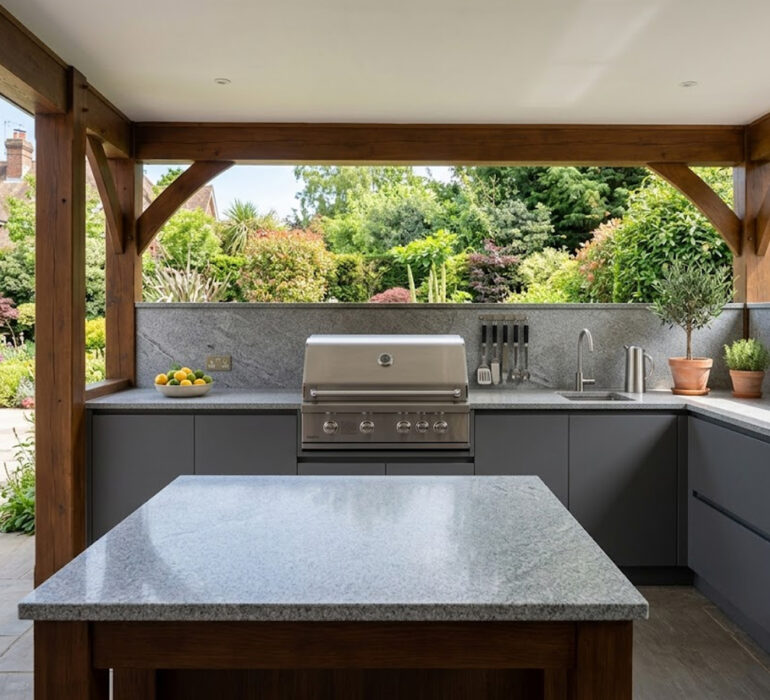
However, we always advise that the 30mm choice remains a classic for a reason. In vast, expansive spaces with grand kitchen islands, the thicker profile creates a powerful, monolithic centrepiece that many view as the quintessential premium countertop look.
Performance and Strength: 20mm vs 30mm Quartz Differences
From a technical fabrication and installation perspective, 20mm vs 30mm quartz profiles differ significantly in material strength. As professional stonemasons, we must consider the structural integrity of the final installation, not just the surface durability.
Engineered quartz itself is incredibly dense and durable regardless of thickness, but the 30mm vs 20mm quartz slabs possess greater inherent structural stiffness. This extra thickness means 30mm quartz is less susceptible to flexing over large spans.
When designing a large bespoke kitchen island with significant overhangs for seating, the 30mm thickness is frequently simpler to engineer. Its superior rigidity allows for greater spans without requiring extensive, hidden structural steel support.
Common Customer Mistakes and Tolerances
One of the most frequent errors we observe occurs when customers fail to check the levelness of their base cabinets before we arrive. A rigid 20mm quartz slab is much less forgiving of uneven surfaces than a robust 30mm piece.
If we fit a 20mm slab onto unlevel units, it may flex slightly, potentially compromising joint tolerances or causing micro-cracking over time. We apply strict millimetre precision during templating to verify structural readiness.
Addressing the Weight and Density Factor
Both materials are exceptionally heavy, and the 30mm vs 20mm quartz weight difference is a critical logistical consideration for our delivery and fitting teams. A 30mm slab is approximately 50% heavier, requiring more specialised manual handling during professional installation.
Despite this, both materials achieve the same high density and non-porous structure that makes them superior to natural alternatives. Their identical non-porous properties make them the premier investment for a highly hygienic, low-maintenance kitchen.
Fabrication and Installation Complexity
The 20mm vs 30mm quartz installation process presents distinct challenges that we navigate using our state-of-the-art CNC technology. Both thicknesses require precision cutting to ensure seamless joints and a perfect fit.
When handling 20mm quartz, we apply extra caution to ensure adequate support, particularly around large sink cutouts. Improper support in these vulnerable areas can cause catastrophic failure on fitting day.
In contrast, the 30mm vs 20mm quartz installation complexity often relates directly to its immense weight. The increased manual handling can occasionally add to the professional installation cost, though it is usually simpler to install structurally once in position.
Seamless Joints and Mitred Edges
Achieving a truly seamless joint is an art form we perfected over decades of working with engineered stone. Both thicknesses are exceptionally well-suited for creating unnoticeable seams.
However, if a homeowner strictly desires the look of a very thick worktop (e.g., 60mm), we always recommend using 20mm quartz with an expertly mitred front edge. This fabrication technique creates a luxurious, chunky appearance while remaining lighter than a massive 60mm solid piece.
Navigating Price: 20mm vs 30mm Quartz Costs
When analyzing 20mm vs 30mm quartz pricing, the dynamic is generally straightforward: the raw material cost is higher for the thicker slab. We consistently find that 30mm quartz commands a roughly 15% to 25% price premium over its 20mm counterpart for the exact same colour.
However, you must look beyond the slab cost when budgeting. The final project price involves complex factors including precise templating, CNC cutting, edge profiling, and professional fitting.
While 30mm quartz is more expensive for the material, the total cost difference for your bespoke kitchen may be less than expected. Our direct-to-consumer model, leveraging in-house fabrication, ensures we keep the 30mm vs 20mm quartz price highly competitive.
| Comparison Factor | 20mm Quartz Worktop | 30mm Quartz Worktop |
| Material Cost | Lower (Approx 15-25% less) | Higher (More raw material) |
| Weight | Moderate (Easier to handle) | High (Specialised lifting needed) |
| Aesthetic | Contemporary, Sleek | Traditional, Substantial |
| Structural Stiffness | Good (May need support) | Excellent (Fewer supports) |
Securing Your Investment with Expert British Fabrication
Ultimately, making the right choice between 20mm vs 30mm quartz requires balancing your desired visual effect with your budget and technical installation constraints. We pride ourselves on offering bespoke solutions that perfectly align with your vision.
Explore our extensive range of high-quality Quartz worktops directly through our platform to understand the stunning variety we offer. Our experienced stonemasons are ready to guide you, leveraging decades of hands-on expertise with both thicknesses.
Safe Fabrication and UK Standards
Cutting engineered stone, regardless of whether it is 20 mm vs 30 mm quartz, generates hazardous silica dust. Our modern fabrication facility operates with advanced wet-cutting systems and air filtration to strictly manage this risk.
We adhere completely to the stringent health and safety regulations set by the gov.uk Health and Safety Executive regarding silica exposure. This commitment protects our workers while guaranteeing you receive an uncontaminated, premium product.
Take the Next Step in Your Kitchen Journey
Choosing the correct worktop is a defining moment in any kitchen renovation. Our team is dedicated to providing flawless service from the initial laser templating to the final impeccable fit.
Submit your kitchen plans or measurements today to receive an exact price calculation by requesting a Free Quote through our secure online portal. Let our expert stonemasons transform your kitchen with precision and pride.