When consulting a comprehensive buying quartz worktops guide, your primary focus must be on selecting high-grade, resin-bound stone that offers complete non-porosity and structural integrity.
Material Composition: Ensure the slab contains approximately 90% natural quartz aggregates for maximum durability against impact and scratches.
Thickness Options: Choose between 20mm for sleek, modern aesthetics or 30mm for traditional, robust spans that require less structural support.
Finish Types: Select a polished finish for high stain resistance or a honed finish for a contemporary, organic matte look.
Fabrication Precision: Always insist on digital laser templating and CNC water-jet cutting to guarantee flawless, millimetre-precise joints.
Navigating the Buying Quartz Worktops Guide: What to Look For
Understanding what separates premium stone from cheap alternatives is the foundation of any reliable buying quartz worktops guide. As experienced stonemasons, we handle massive slabs daily and know exactly how different manufacturing processes affect the final product’s durability.
Premium engineered stone is produced using advanced vibro-compression technology under extreme vacuum pressure. This industrial process entirely eliminates microscopic air pockets, ensuring the final slab is completely non-porous and structurally sound.
If a manufacturer cuts corners during this pressing stage, the resulting stone will be prone to chipping during the CNC milling process. This is why we rigorously source only the highest quality materials for our Bespoke quartz worktops, guaranteeing a flawless finish for every bespoke kitchen project.
Understanding Quartz Quality and Composition
The exact ratio of natural quartz crystals to synthetic polymer resins heavily dictates the scratch and heat resistance of your new kitchen surfaces. High-quality slabs maintain a 90% mineral composition, providing the hard-wearing resilience that busy UK households demand.
Lesser quality imports often use a higher percentage of cheap resins, which makes the stone significantly more vulnerable to thermal scorch marks and UV fading. Always ask your fabricator about the specific brand and composition of the stone before committing to a purchase.
Evaluating Thickness: 20mm vs 30mm Profiles
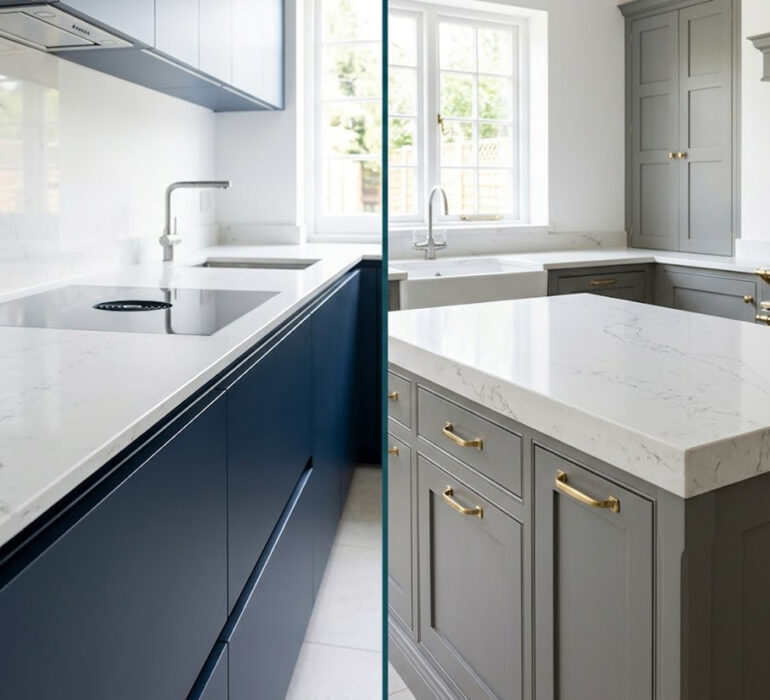
Deciding between a 20mm or 30mm profile is a critical step in your journey, heavily influencing both the visual aesthetic and the required cabinetry support. A 20mm thickness is the current favourite for contemporary, minimalist designs featuring handleless kitchen units.
Conversely, 30mm stone provides a substantial, monolithic appearance that suits traditional Shaker-style kitchens perfectly. While thicker slabs are heavier and slightly more expensive, their inherent rigidity often means they require fewer structural supports over large spans.
Common Mistakes Highlighted in Our Buying Quartz Worktops Guide
A crucial aspect of any professional quartz worktop buying guide is helping property owners avoid disastrous structural and aesthetic errors. We frequently arrive on-site to find clients have made fundamental mistakes during the preparatory stages of their kitchen renovation.
The most catastrophic error is failing to ensure the wooden base cabinets are perfectly true and level before our installation team arrives. If you place a heavy, rigid stone slab onto an uneven frame, the uneven weight distribution creates massive internal tension that will inevitably cause stress fractures.
Another frequent oversight is selecting complex, deeply recessed sink drainer grooves without considering the structural implications. These intricate cutouts must be precisely milled in our factory, as attempting them on-site with manual tools risks chipping the stone and generating hazardous dust.
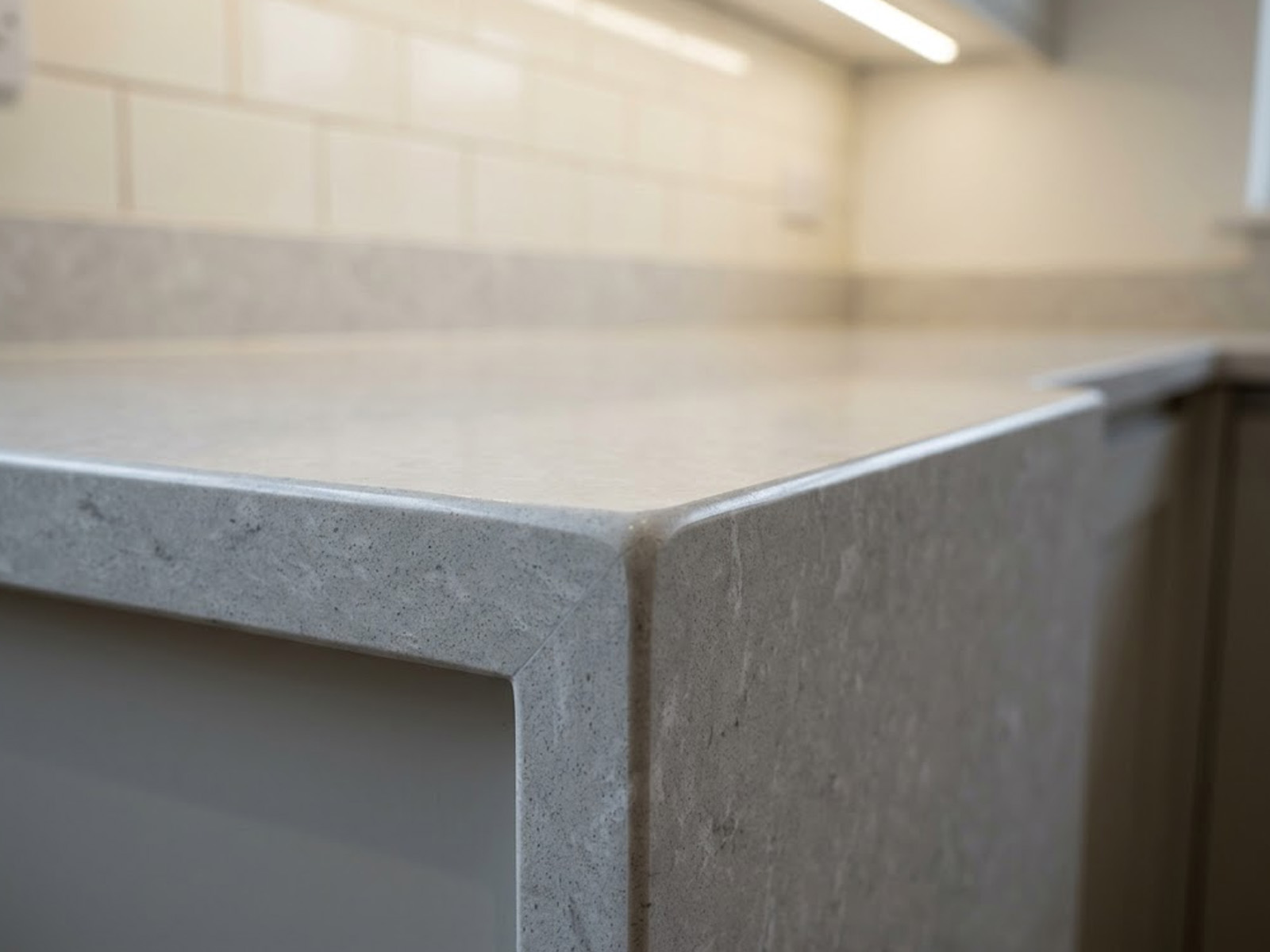
Choosing the Wrong Edge Profile for Your Lifestyle
Selecting a sharp, 90-degree square edge profile might look incredibly modern, but it is highly susceptible to impact damage in a busy family kitchen. Heavy cast-iron pans easily chip sharp stone corners, leading to expensive and frustrating repair work.
We always advise our clients to choose a slightly rounded pencil, a bevelled, or a bullnose edge profile to deflect daily impacts safely. Rounded edges distribute physical force much more effectively, preserving the pristine condition of your bespoke installation for decades.
Misjudging the Reality of Heat Resistance
Many homeowners mistakenly believe that engineered stone is completely heat-proof, which leads to severe resin scorch marks. While the natural quartz minerals are stable, the synthetic polymer resins binding them will melt or crack if exposed to direct heat exceeding 150°C.
You must always use protective wooden trivets or integrated stainless steel hot rods to keep boiling pans away from the polished surface. Establishing this simple daily habit is the single most effective way to protect your long-term kitchen investment.
Aesthetic Considerations in Your Buying Quartz Worktops Guide
Matching your new stone to your existing cabinetry and lighting is a defining element of this buying quartz worktops guide. The sheer variety of pigments and veining patterns available means you can perfectly tailor the stone to your home’s unique architectural style.
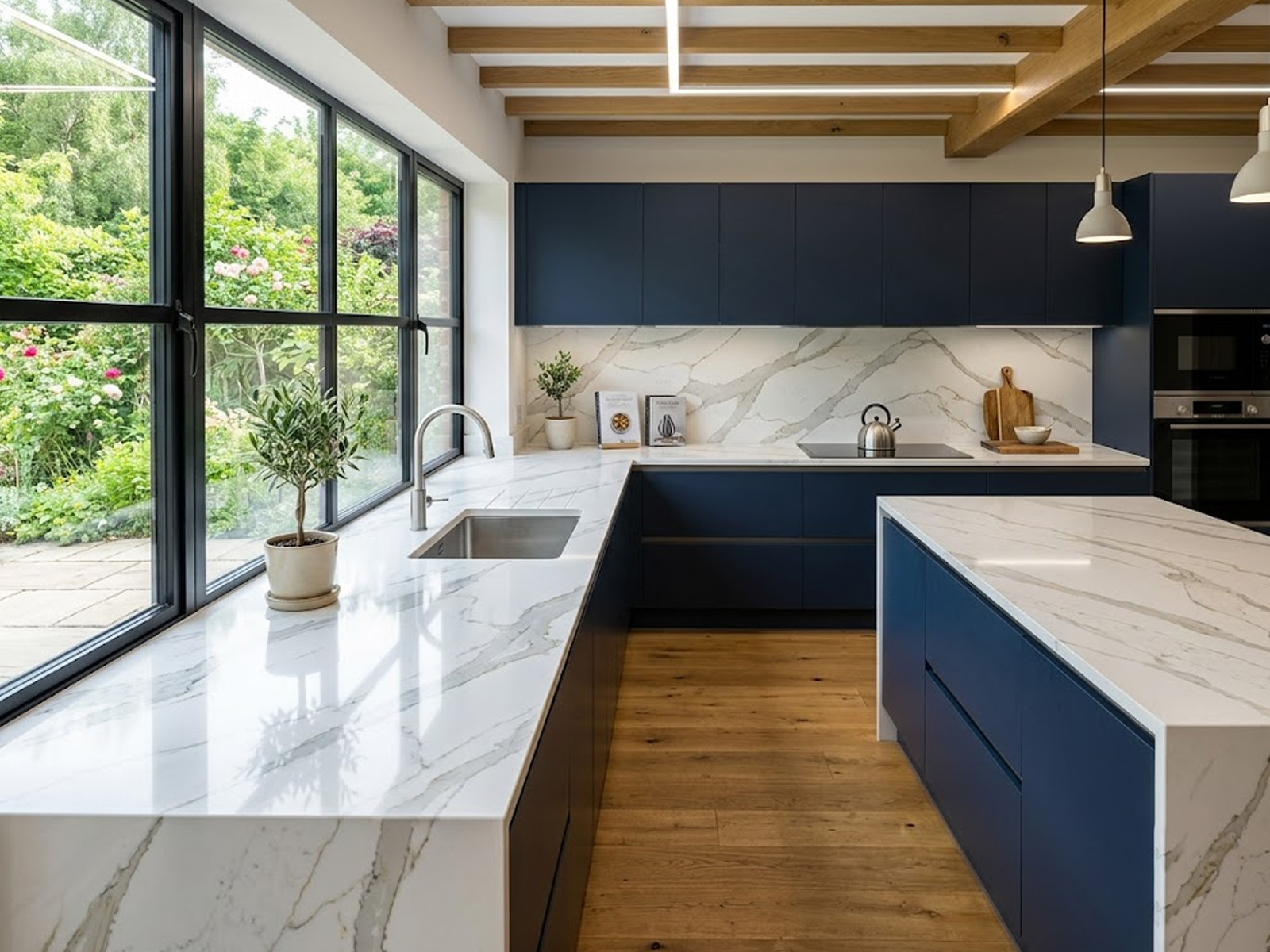
We always recommend viewing a full-sized slab rather than relying on a tiny four-inch sample square provided in a showroom. Small samples cannot accurately represent how large, sweeping Calacatta veins or subtle mirror flecks will actually flow across a massive kitchen island.
Selecting Veining Patterns and Colours
Solid greys and fine-grained patterns are incredibly forgiving, making it very easy for our stonemasons to create virtually invisible joint seams. These uniform designs are perfect for minimalist spaces where you want the cabinetry to remain the primary visual focus.
Heavily veined marble-effect designs require highly skilled digital templating to ensure the patterns match perfectly across any necessary joints. This vein-matching process demands immense precision and artistic planning to ensure the final installation looks like a continuous, organic piece of rock.
Polished vs Matte Finishes
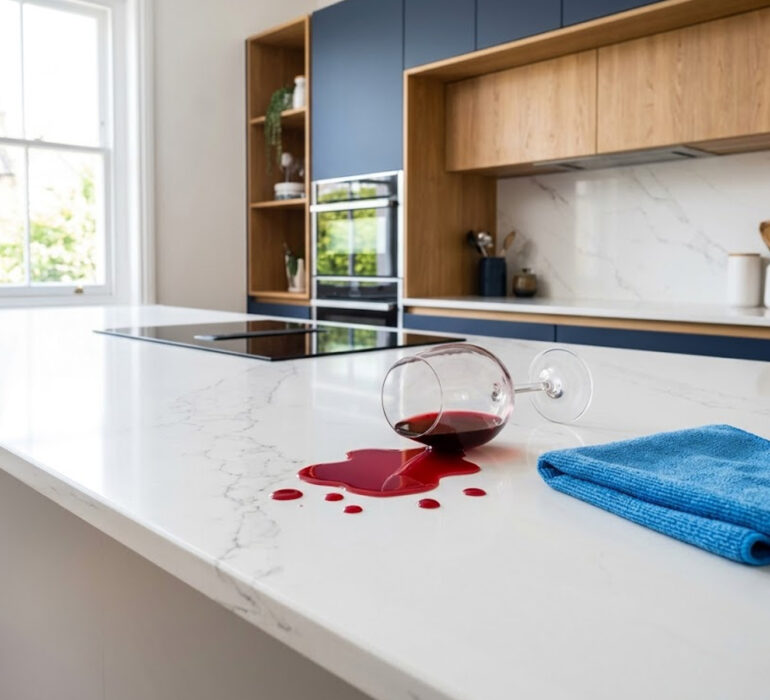
A highly polished finish is the traditional choice, offering a mirror-like gloss that reflects light beautifully and is exceptionally easy to wipe clean. The smooth surface gives liquid spills and greasy fingerprints absolutely nothing to cling to, making it highly sanitary.
Honed or suede finishes provide a gorgeous, velvety matte texture that absorbs light, creating a grounded, contemporary industrial aesthetic. However, you must be aware that matte finishes hold onto finger oils more readily and require slightly more frequent daily wiping.
To understand exactly how to care for these different textures safely, consult our dedicated article on how to clean quartz worktops. Using the correct, non-abrasive cleaning methods guarantees your chosen finish will last a lifetime.
Budgeting and Value: A Buying Quartz Worktops Guide to Costs
Navigating the financial aspects of your renovation is a pivotal chapter in our buying quartz worktops guide. Understanding exactly what factors drive the final price ensures you allocate your renovation budget efficiently without compromising on engineering quality.
The final quotation involves far more than just the raw material; it encompasses digital templating, complex CNC cutting, edge polishing, and professional fitting. Complex additions like seamlessly matched full-height splashbacks or recessed sink cutouts naturally increase the required manufacturing time.
To help you benchmark your budget effectively, we have compiled a structural and financial comparison of premium materials. The table below outlines how engineered stone performs and prices against natural alternatives.
| Material Type | Porosity | Maintenance Requirement | Average Fabrication Complexity |
| Engineered Quartz | 100% Non-Porous | Very Low (Wipe clean) | High (Requires CNC precision) |
| Natural Granite | Naturally Porous | High (Annual sealing) | Exceptionally High |
| High-End Laminate | Non-Porous | Low (Wipe clean) | Low (Can be cut on-site) |
For a highly detailed breakdown of average UK pricing structures, we strongly advise reading our comprehensive analysis of Quartz Worktop Costs in the UK. Thorough financial planning ensures you can comfortably afford the precision craftsmanship your home deserves.
Bypassing Middlemen with Direct Fabrication
Securing the best value for your bespoke kitchen means strictly avoiding traditional high-street showrooms that inflate prices with massive retail markups. By managing the entire process internally, independent fabricators can offer vastly superior pricing on premium slabs.
At Austin Laminate, our direct-to-consumer business model guarantees that you only pay for premium materials and master craftsmanship. We handle the digital laser templating, the wet-cut CNC fabrication, and the final professional installation entirely in-house.
This streamlined approach eliminates costly delays and ensures absolute quality control from the initial survey to the final polish. If you are ready to secure a transparent, highly accurate price, request an Instant free quote through our secure online portal today.
Health, Safety, and Fabrication Standards
A responsible quartz worktop buying guide must address the rigorous safety standards required to manufacture these dense stone products. Cutting engineered slabs generates fine crystalline silica dust, which poses severe respiratory risks if inhaled by workshop staff.
Our modern fabrication facility operates with advanced wet-cutting CNC machinery that completely suppresses and captures this hazardous dust at the source. We take our occupational health responsibilities incredibly seriously, ensuring a safe, clean environment for our master stonemasons.
Our operations comply entirely with the strict workplace safety regulations enforced by the gov.uk Health and Safety Executive. This unwavering commitment guarantees that your bespoke surfaces are crafted ethically and arrive at your property completely uncontaminated.
Finalising Your Project: Templating and Installation
The final step in your quartz worktop guide journey is preparing your home for the physical installation. We utilise highly advanced digital laser templating to map your kitchen’s unique dimensions to strict millimetre tolerances before any cutting begins.
This precise data is fed directly into our CNC machines, guaranteeing that complex corner joints and appliance cutouts align perfectly. It completely eliminates the need for messy, hazardous on-site cutting, ensuring a smooth and rapid fitting day.
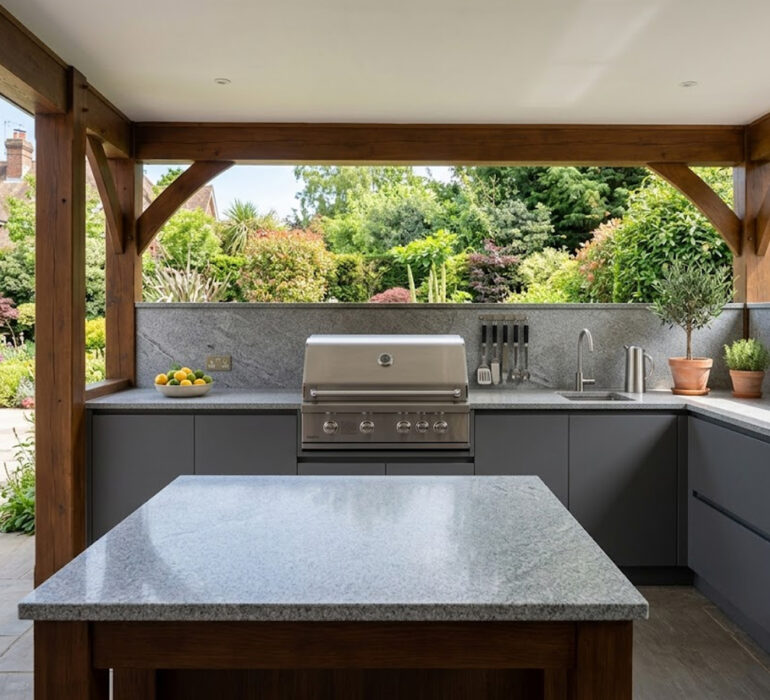
If you are still debating whether engineered stone is the right choice compared to natural rock, review our expert comparison of quartz vs granite worktops. Let our dedicated team of professionals deliver a flawless, high-value finish that transforms your property for decades to come.